Why Your Garage Door Won’t Open: 7 Fixes to Try First
Garage doors are the most-used entry point in most homes, and according to Chamberlain Group, opener malfunctions are one of the top 3 service calls homeowners make — yet most causes behind why your garage door is not opening come down to 7 fixable problems.
Most homeowners assume the worst and call a technician immediately, costing $75–$150 for a service visit that a 10-minute self-diagnosis could have prevented.
Work through the 7 fixes below in order, and you will either solve the problem yourself or arrive at a technician call with a precise diagnosis — saving time and money either way.
Power and Electrical Issues
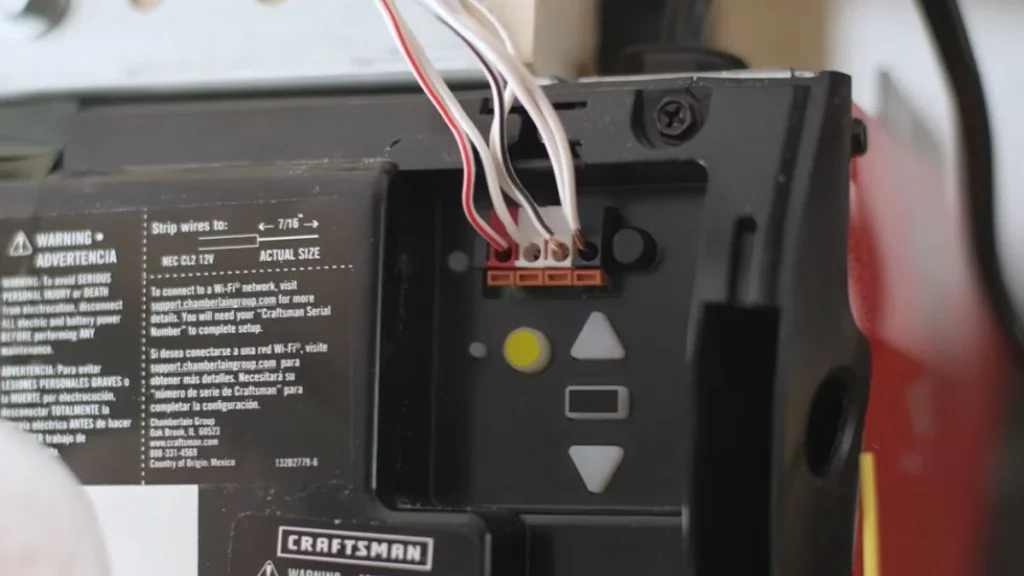
Power problems are the most common — and most overlooked — cause of garage door opener failure. Before assuming a mechanical fault, rule out every electrical possibility first.
Is the Opener Actually Getting Power?
Walk to the opener unit mounted on your ceiling and check that the power cord is firmly seated in the outlet. Cords can loosen over time from vibration, or get pinched against a rafter. Plug a lamp or phone charger into the same outlet to confirm it has live power — if nothing works in that outlet, the problem is upstream of your opener entirely.
Has the Circuit Breaker Tripped?
Locate your home’s electrical panel and find the breaker labeled “garage.” A tripped breaker sits in the middle position — neither fully on nor fully off. Flip it completely off, then firmly back on. If the garage door circuit breaker trips again within minutes, stop. Repeated tripping signals a wiring fault or motor issue that needs a licensed electrician, not a DIY reset.
Does the Wall Switch Work Independently?
Press the wall-mounted button directly — not your remote. This single test splits your garage door opener troubleshooting into two clear paths.
- Wall button works, remote does not: The opener has power. Isolate the problem to the remote control battery, remote programming, or photoelectric sensors.
- Neither wall button nor remote works: You have a confirmed power or motor issue.
Knowing which path you are on prevents wasting time chasing the wrong fix.
Remote Control and Sensor Problems
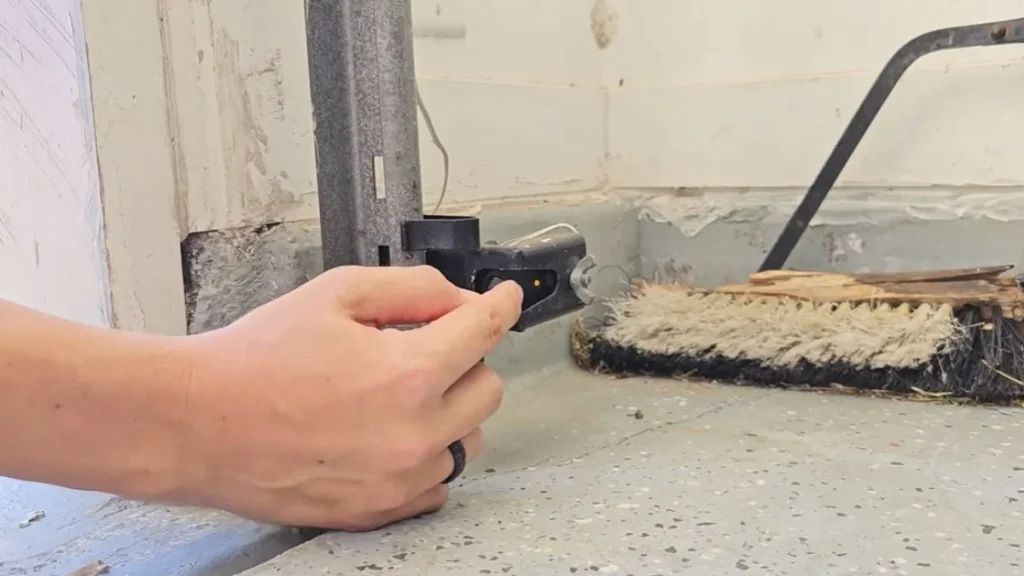
A garage door not responding to remote commands is the second most common complaint after power issues — and it almost always traces back to one of two components: the remote itself or the photoelectric sensors mounted at the base of the door frame.
Remote Control Battery and Signal Issues
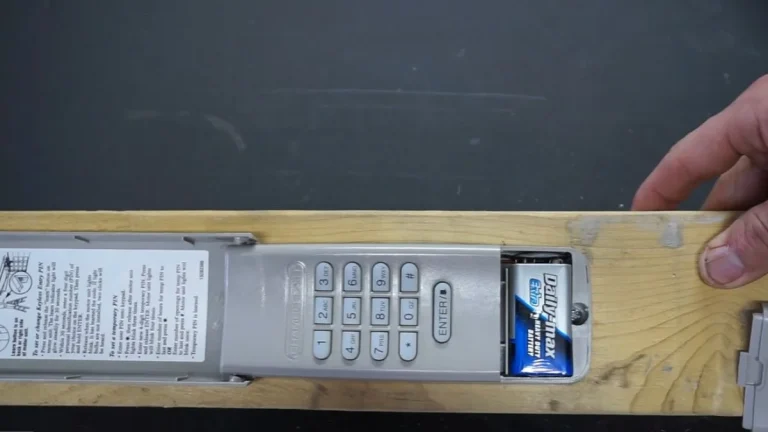
Start with the simplest fix: replace the remote control battery. Most Chamberlain, LiftMaster, and Craftsman remotes use a 3V CR2032 coin battery or a 12V A23 battery — check the back panel for the exact type. When inserting the new battery, confirm the positive and negative terminals match the diagram inside the compartment. A reversed battery delivers zero power.
If fresh batteries do not resolve the issue, test signal range. Stand within 10 feet of the opener unit and try again. Metal garage ceilings, thick concrete walls, and nearby LED lighting can all interfere with the 315MHz or 390MHz radio frequency most openers use. If the remote works only at close range, the antenna wire hanging from the opener motor unit may be bent or tucked upward — it should hang straight down.
Still no response? Reprogram the remote following the manufacturer’s instructions. On most LiftMaster and Chamberlain units, this means pressing the “Learn” button on the motor head until the indicator light glows, then pressing your remote button within 30 seconds.
Photoelectric Safety Sensor Problems
Garage door sensor problems are responsible for more unexplained door failures than most homeowners realize. Federal law has required photoelectric sensors on all residential openers since 1993 — they prevent the door from closing on a person or object, but a misaligned or dirty sensor also stops the door from opening properly.
Locate the two sensors mounted 4–6 inches off the ground on each side of the door track. Each has a small LED indicator:
- Green light (receiving sensor): Clear line of sight, functioning correctly
- Red or blinking light (sending sensor): Beam is blocked, misaligned, or the lens is dirty
Clean both lenses with a soft, dry cloth — never use water or glass cleaner, which can leave residue. If the LED still shows red, loosen the mounting bracket wing nut, manually angle the sensor until the green light holds steady, then retighten.
Manual Lock and Track Alignment
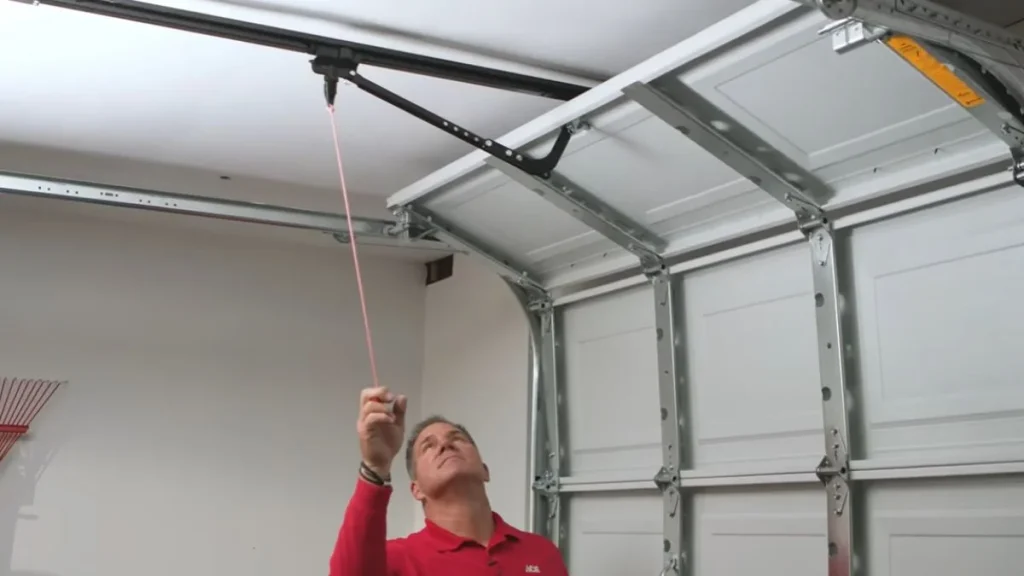
Two mechanical causes that homeowners consistently overlook are an engaged manual lock and garage door track misalignment. Both are visible to the naked eye and require no tools to diagnose.
Is the Manual Lock Engaged?
Many garage doors have a manual lock — a red-handled lever or knob mounted on the door’s interior carriage trolley or directly on the door panel. When this lock is engaged, the motor runs but the door does not move. This is the classic “garage door won’t open motor running” symptom.
Look for a lever sitting parallel to the rail — that means locked. Rotate or slide it to the perpendicular position to disengage. This lock exists as a security feature, and it is easy to engage accidentally when brushing past the door or pulling the emergency release cord.
Is the Track Clear and Aligned?
Stand inside the garage and visually inspect both vertical and horizontal tracks. Run your eyes along the full length of each rail, looking for:
- Visible dents, bends, or crimps in the metal track
- Gaps between the track and its wall-mounting brackets
- Debris, tools, or boxes sitting inside or directly beneath the track path
- Rust buildup causing rollers to bind
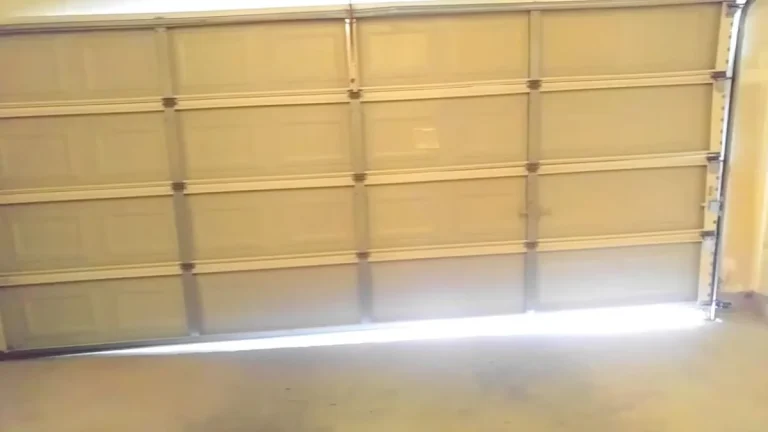
Grinding or scraping sounds during operation point directly to garage door track misalignment or a roller that has jumped the track. You can remove small debris yourself, but a bent or separated track requires professional repair. Forcing a door along a damaged track risks snapping the torsion springs or derailing the door entirely — both significantly more expensive repairs than a straightforward track realignment.
Motor Running But Door Not Moving
When the motor hums or runs through its full cycle but the door stays completely still, the problem is mechanical — something between the motor and the door has failed. Power is confirmed; the drive system is not.
Nylon Gear Wear
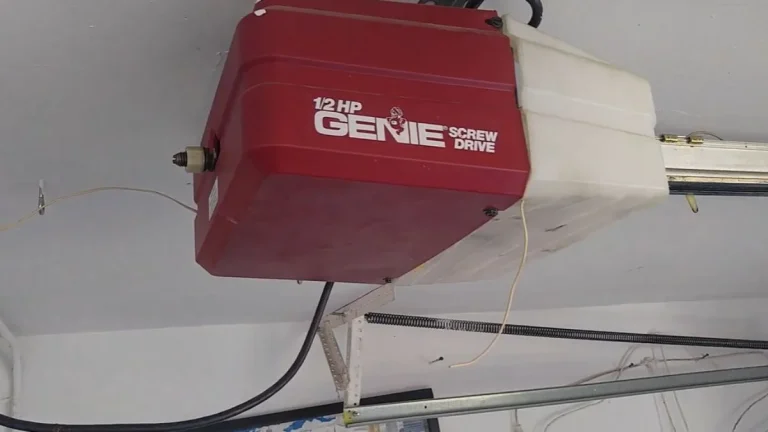
The most common culprit is a worn or stripped nylon drive gear inside the opener unit. This small gear meshes with the motor’s worm gear to transfer power to the chain or belt. On high-use openers — particularly Chamberlain and Craftsman units older than 7 years — the nylon teeth grind down gradually until the gear spins freely without gripping. The result is a motor that runs at full speed while the door never moves. A replacement nylon gear kit costs $15–$30 and is a legitimate DIY repair for intermediate-skill homeowners.
Chain or Belt Tension Loss
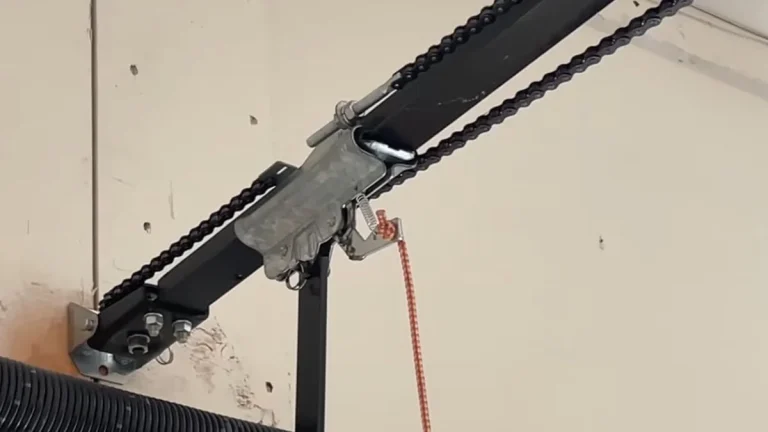
A loose or broken drive chain is the second possibility. With the door closed, look at the chain or belt running along the rail. It should have minimal sag — Chamberlain specifies no more than 1/2 inch of slack measured at the midpoint of the rail. Excessive sag means the chain cannot engage the trolley properly. Garage door chain tension adjustment is done via the threaded adjustment bolt at the front of the rail, but a fully snapped chain or belt requires complete replacement.
Carriage Trolley Failure
The carriage trolley rides along the rail and physically connects the drive system to the door arm. If the trolley has jumped the rail or its internal disconnect has been triggered, the motor runs freely with zero door movement. Check that the red emergency release cord has not been accidentally pulled, disconnecting the trolley from the drive carriage. Reconnect by pulling the release cord toward the door until you hear a click.
If it’s making a humming sound but not moving at all, that points to a specific motor issue.
Frequently Asked Questions
Why is my garage door motor running but the door won’t open?
The motor is working but the mechanical connection to the door has failed. The 3 most likely causes are a stripped nylon drive gear, a broken or overly slack drive chain, or a carriage trolley that has been disconnected from the rail — either accidentally via the emergency release cord or through internal wear.
How do I know if my garage door spring is broken?
A broken torsion spring produces a loud bang — often described as a gunshot — followed by a door that is extremely heavy and will not lift more than a few inches manually. Look above the door horizontally mounted on the metal bar; a visible gap in the coil confirms the spring has snapped.
Can I manually open my garage door if the opener doesn’t work?
Yes. Pull the red emergency release cord hanging from the opener carriage to disconnect the door from the drive system, then lift the door manually from the bottom. Note that a door with a broken torsion spring will be dangerously heavy — in that case, do not attempt manual operation and call a technician.
Get Your Door Operating Again
Most garage door failures trace back to one of 7 fixable problems — and the majority resolve without a technician if you work through them in order, from power and electrical issues down to mechanical drive components. Start right now by pressing your wall button to confirm whether the opener has power, then follow each fix in sequence until the door moves.
If the spring is visibly broken or the track is bent, stop and call a certified garage door technician — those two repairs carry genuine injury risk and are not DIY territory.