How to Clean a Screw Drive Garage Door Opener (Complete Guide)
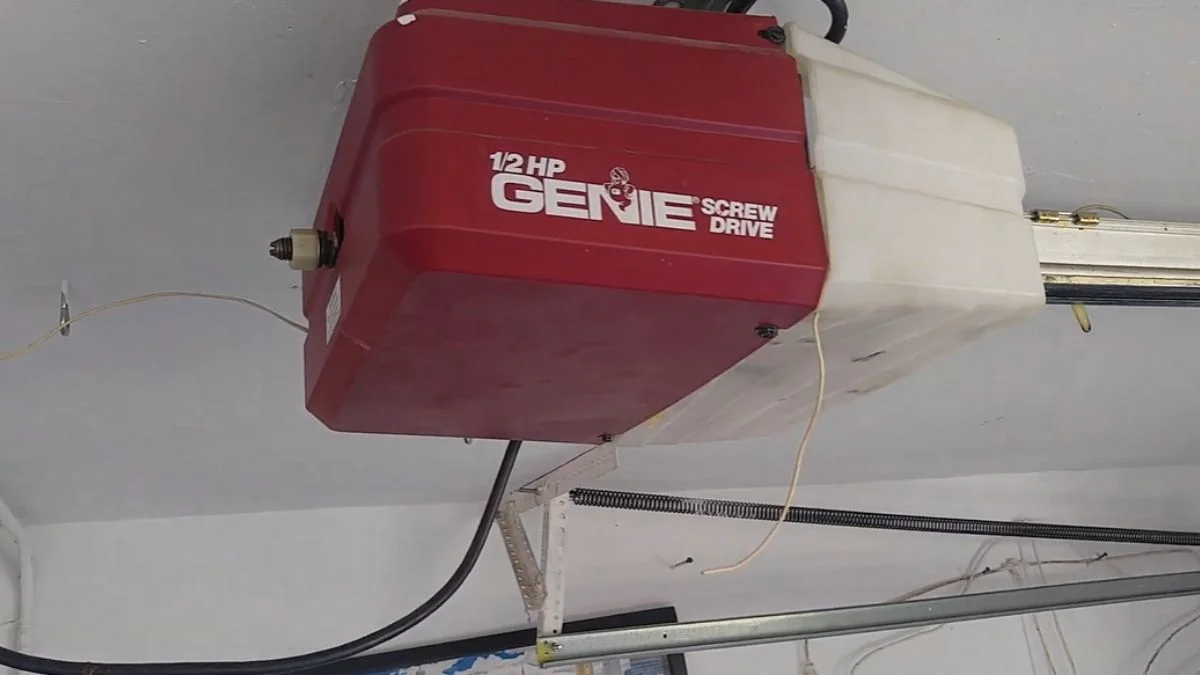
Over-greasing a screw drive garage door opener causes more damage than skipping lubrication entirely — and knowing how to clean a screw drive garage door opener correctly is what separates a smooth-running unit from one grinding itself to failure.
Most Genie screw drive owners notice the problem as a grinding noise or sluggish movement, but they rarely realize old grease packed with debris is the actual culprit — not worn parts.
This guide gives you a complete, step-by-step cleaning process, the right products to use, and clear safety rules so you can restore quiet, reliable operation without making the most common DIY mistake.
Why Cleaning Comes First
Lubrication without cleaning first is the single most common mistake in screw drive garage door opener maintenance — and it makes the problem worse, not better.
What Happens When Grease Builds Up
Grease does not stay clean. Over months of operation, the lubricant on a threaded screw rod collects dust, metal shavings from normal wear, and airborne debris from the garage itself. That mixture thickens into a dense sludge that resists movement instead of enabling it.
The result? A drive screw that has to fight through contaminated residue on every cycle. That is what causes the classic garage door opener noise — the grinding or straining sound most owners mistake for a failing motor. The opener is not failing. It is suffocating under old grease.
Why Adding More Lubricant Makes It Worse
Fresh lubricant cannot penetrate a hardened layer of old grease and debris. It sits on top of the contamination, adding volume without reducing friction. The threaded rod keeps dragging, the noise continues, and the motor works harder than it should.
This is the core problem with skipping excess grease removal: every re-lubrication cycle without a prior cleaning compounds the buildup. After two or three rounds of this, degreasing the garage door opener rail becomes significantly harder — and the sludge can be thick enough to cause the opener to stall mid-cycle.
Genie’s own maintenance guidance assumes a clean surface before any lubricant application. Cleaning is not optional prep work. It is step one.
Step-by-Step Cleaning Process
Materials and Safety Setup
Before touching the opener, unplug it from the wall outlet. Brake cleaner is flammable and produces fumes — working on a live unit is an electrical hazard you do not need.
Lay a drop cloth or cardboard directly beneath the rail to catch solvent runoff and loosened grease. For most Genie screw drive units, you can clean the threaded rod in place without removing the rail. Only remove the rail if the buildup is severe enough that you cannot reach the full screw rod length from ground level.
Your basic kit:
- Aerosol brake cleaner (CRC Brakleen or equivalent)
- Compressed air (canister or compressor)
- Stiff wire brush
- Safety glasses and nitrile gloves
Applying Solvent and Removing Debris
Spray brake cleaner along the entire length of the drive screw, working from one end to the other. Let it soak for 30 to 60 seconds — the solvent needs time to break down hardened grease.
Follow immediately with compressed air to blow loosened debris and old lubricant off the threaded rod. For stubborn buildup packed into the thread grooves, work a stiff wire brush along the screw in short strokes. Repeat the spray-and-blow sequence until the threads are visibly clean metal.
Ventilate the garage. Brake cleaner fumes accumulate fast in enclosed spaces.
Deep Cleaning for Heavy Buildup
For severe over-greased garage door opener situations, attach a soft wire wheel to a drill and run it at low speed along the screw rod. This clears compacted sludge that a hand brush cannot reach.
Avoid this method on openers older than 15 years — aggressive mechanical cleaning can damage worn thread surfaces. Finish with a final brake cleaner rinse and allow the rod to air dry completely before any lubricant application.
Proper Lubrication After Cleaning
Never lubricate a dirty screw drive. If the threaded rod is not clean and fully dry, skip this step and go back to cleaning.
Application Quantity and Placement
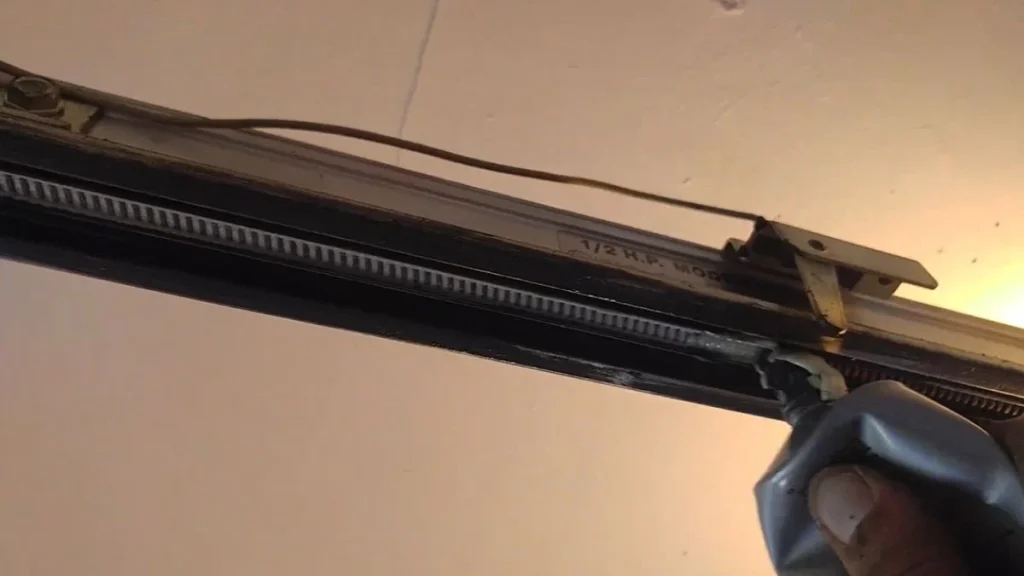
Genie specifies a pea-sized amount of grease per application point — not a bead along the entire rod, not a generous coat. More is not better here.
Apply the grease at several points distributed evenly along the full length of the threaded rod rather than depositing it all in one spot. Then run the door through 2 to 3 complete open-and-close cycles. This works the lubricant into the thread grooves evenly and spreads it across the drive screw contact surface where it actually reduces friction.
Recommended Lubricants and Compatibility
Genie sells its own screw drive grease formulated specifically for threaded rod lubrication on their units. It is the safest choice for Genie openers and removes compatibility guesswork entirely.
Suitable alternatives include white lithium grease and light machine oil — both work well on screw drives without building up the dense residue that causes problems. Avoid automotive chassis grease. Its viscosity is too heavy for screw drive applications and it attracts debris faster than lighter formulations.
Chamberlain and Craftsman screw drive openers follow similar lubrication logic, but always check your model’s manual before using a Genie screw drive lube alternative on a different brand.
Common Issues and Solutions
| Symptom | Likely Cause | Action |
|---|---|---|
| Noise persists after cleaning | Debris still trapped in threads or worn drive screw | Repeat cleaning cycle; inspect screw for visible wear |
| Door moves sluggishly after lubrication | Over-application of grease | Wipe excess, run cycles to redistribute |
| Door barely moves or stalls | Spring tension issue or motor burnout | Call a professional — not a lubrication problem |
| Grinding worsens over time | Irreversible drive screw wear | Professional inspection required |
Frequently Asked Questions
How much lubricant should I apply to the screw rod?
Apply a pea-sized amount of grease at several evenly spaced points along the full length of the threaded rod. Run the door through 2 to 3 complete cycles immediately after to distribute the lubricant evenly across the drive screw contact surface.
Can I use WD-40 or regular grease on my screw drive opener?
WD-40 is a solvent and water displacer, not a lubricant — it will strip existing grease and leave the threaded rod unprotected within days. Use white lithium grease or Genie’s purpose-formulated screw drive grease instead; standard automotive grease is too heavy and attracts debris faster than lighter alternatives.
What’s the difference between screw drive and chain drive maintenance?
A screw drive uses a rotating threaded rod to move the trolley, which requires periodic cleaning and light grease application on the rod itself. A chain drive uses a metal chain that needs chain lubricant applied directly to the links — over-greasing a chain drive creates a different set of problems, including chain slap and accelerated dirt accumulation on the drive rail.
Keep Your Opener Running Smoothly
Cleaning the threaded rod before every lubrication cycle is the one habit that prevents most screw drive garage door opener failures.
Start today by unplugging your Genie opener, spraying the full length of the drive screw with brake cleaner, and letting it dry completely before applying a pea-sized amount of white lithium grease at evenly spaced points along the rod. Do this once a year and your opener will run quietly for years without needing professional service.