How to Stop Water Coming Under Garage Door (5 Solutions)
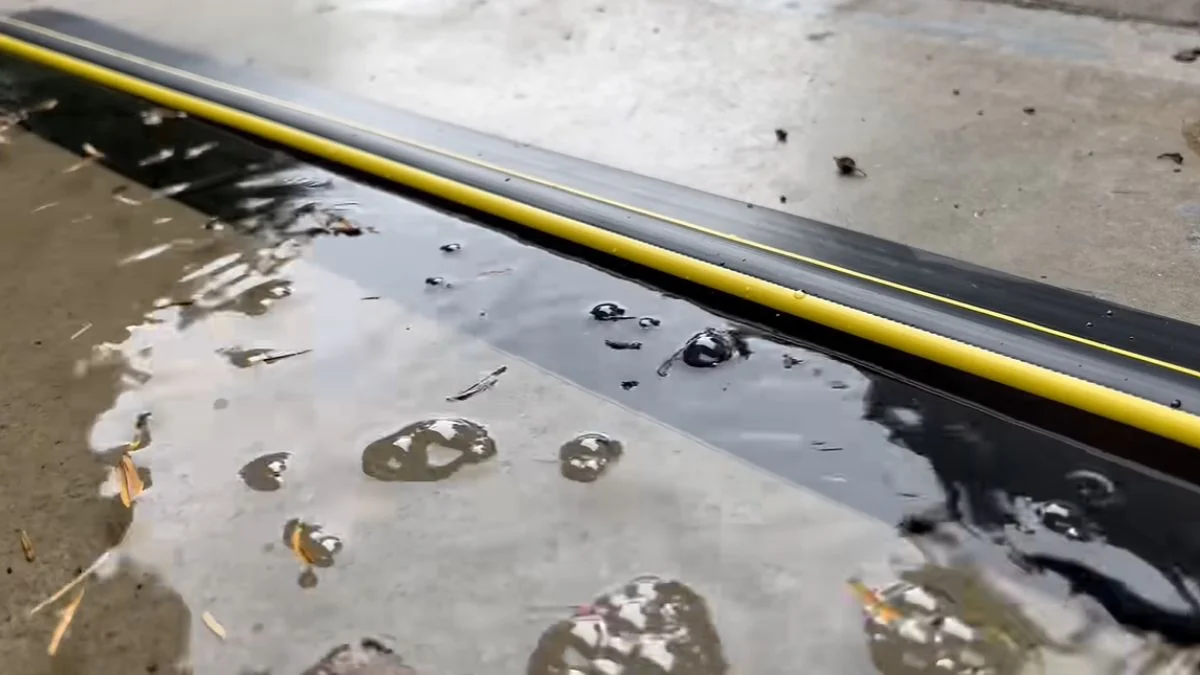
Water coming under garage door openings is one of the most common causes of garage floor damage, and in most cases it comes down to a failed bottom seal, a compromised threshold, or a drainage problem that costs under $50 to fix.
The frustrating part is not knowing whether you need a simple $10 seal replacement or a full regrading project — and guessing wrong wastes money and leaves the water problem unsolved.
This guide walks you through an exact diagnostic process and 5 targeted solutions so you can identify the right fix for your specific situation and stop the flooding for good.
Why Water Comes Under Your Garage Door
Before you buy a single product, you need to know which of the 4 root causes is driving your problem. Each one has a different fix.
Failed or Deteriorated Door Seals and Weather Stripping
The bottom seal — also called a door bottom gasket — is a rubber or vinyl strip that presses against the floor when the door closes. Most seals last 2 to 5 years before weather seal degradation sets in, especially in climates with freeze-thaw cycles. Signs of failure include visible cracking, flattening, curling at the edges, or daylight visible under the closed door.
Compression loss is the hidden killer here. Even a seal that looks intact may have hardened enough that it no longer conforms to the floor surface, leaving gaps that allow water pooling under garage door openings during heavy rain.
Improper Driveway and Garage Floor Grading
Water follows gravity. If your driveway is flat or pitches toward the garage instead of away from it, every rainstorm directs runoff straight to your threshold. The standard recommendation for garage floor slope away from door openings is a minimum 1/8 inch drop per foot toward the interior drain or away from the structure.
Driveway pitch and garage door water damage often go hand in hand — this is a grading problem, not a seal problem.
Wind-Driven Rain and Door Frame Gaps
During heavy storms, rain doesn’t just fall straight down. Wind forces water horizontally into side-frame gaps between the door panel edges and the frame opening. Garage door weather stripping failure on the vertical jamb seals makes this significantly worse.
Threshold or Lip Damage
A threshold lip is a raised rubber or aluminum barrier bonded to the floor at the base of the door. Cracked, missing, or improperly installed threshold lips allow water to slide beneath even a functional bottom seal. Threshold lip installation requires a level surface and proper adhesive — a crooked or low-profile threshold simply redirects water inward instead of blocking it.
5 Essential Fixes Ranked by Cost and Complexity
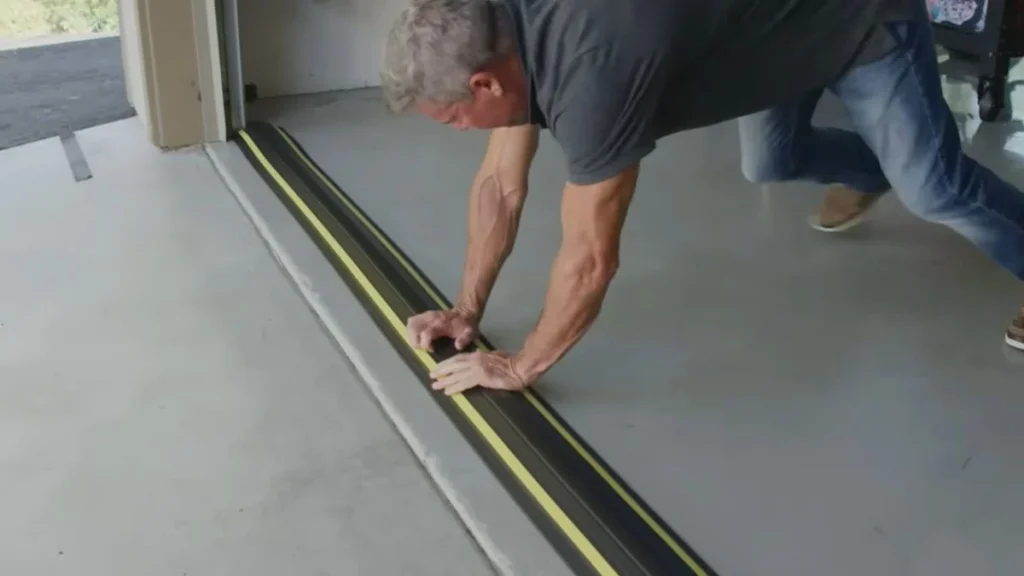
These solutions are ordered from cheapest and easiest to most involved. Start at the top and work down until the problem is solved.
Fix 1: Replace the Garage Door Bottom Seal
This is the first thing to check. A door bottom gasket replacement costs $10–$30 in parts and takes 30–60 minutes with a flathead screwdriver and a utility knife.
First, identify your seal type. Standard seals slide into a retainer channel along the door’s bottom edge. High-rise seals are used when there is a gap larger than 1 inch between the door bottom and the floor — common on uneven concrete. Measure the gap before buying.
Call a professional if the retainer channel itself is bent or corroded, which prevents any seal from sitting flush.
Fix 2: Install or Upgrade a Garage Door Threshold
A threshold seal bonds to the floor and creates a raised lip the door closes against. Asymmetrical thresholds — with a taller front face and shorter rear — outperform standard flat designs because they deflect water before it reaches the door bottom.
Threshold lip installation height should be 1/2 to 3/4 inch. Any lower and water rides over it; any higher and the door won’t compress it properly. Most DIYers complete this in under an hour using the adhesive included with products like the Garadry or M-D Building Products threshold kit.
Fix 3: Regrade the Driveway
When driveway pitch sends water toward the garage instead of away, no seal system holds long-term. Ground slope grading by a licensed contractor typically costs $500–$3,000 depending on surface area and severity.
For renters or tight budgets, a water-diversion channel drain installed across the driveway width — available at Home Depot for $40–$80 — acts as an effective temporary barrier against garage door water damage.
Fix 4: Seal the Door Frame Perimeter
Wind-driven rain enters through side and top frame gaps, not just under the door. Use polyurethane sealant for exterior masonry gaps — it bonds to concrete, brick, and wood and stays flexible through temperature swings. Silicone works on metal frames. Avoid acrylic latex caulk outdoors; it cracks within one season.
The most common mistake here is sealing the interior face of the frame instead of the exterior joint where the frame meets the wall — that exterior gap is where water actually enters.
Fix 5: Add a Garage Door Sweep or Shield System
Rubberized sweep systems attach directly to the door’s exterior face and add a secondary water barrier below the bottom seal. Rigid aluminum flood shields, such as those made by US Flood Control, create a physical dam rated for several inches of standing water.
Sweeps work well for moderate rain intrusion. Shields are the right call when your garage sits in a flood-prone area or below street level, where hydrostatic pressure makes standard seals inadequate.
If the water is pooling specifically at the threshold rather than along the whole bottom edge, the concrete threshold itself may be cracked or sloped wrong — here’s how to fix that.
When to DIY vs. When to Hire a Pro
Most garage door water fixes are legitimate DIY projects. The exceptions are specific — and ignoring them leads to recurring damage that costs far more than a professional visit would have.
Red Flags That Require Professional Assessment
Call a contractor when you see any of these:
- Water appears even after replacing the door bottom gasket and installing a threshold — this points to a grading or drainage problem beyond the door itself
- The garage floor has efflorescence (white mineral deposits) or visible cracks, which signal hydrostatic pressure basement issues pushing water up through the slab
- Water enters from multiple points simultaneously — side frames, bottom, and ceiling — indicating a systemic drainage failure
- The driveway slope runs consistently toward the garage across more than 10 feet, requiring professional ground slope grading rather than a simple channel drain fix
Time and Tool Requirements by Fix
| Fix | DIY Time | Tools Needed | Avg. Cost (DIY) |
|---|---|---|---|
| Bottom seal replacement | 30–60 min | Flathead screwdriver, utility knife | $10–$30 |
| Threshold installation | 45–90 min | Tape measure, caulk gun, roller | $25–$60 |
| Frame caulking | 20–40 min | Caulk gun, painter’s tape | $10–$20 |
| Channel drain install | 2–3 hours | Shovel, level, concrete mix | $40–$120 |
| Driveway regrading | N/A — hire out | Professional equipment required | $500–$3,000 |
The Cost of Choosing Wrong
A $15 door bottom gasket fixes weather seal degradation in an afternoon. But if water pooling under the garage door stems from a reversed driveway pitch, that $15 fix lasts one storm. Repeated water intrusion warps OSB wall sheathing, corrodes metal door components, and creates mold conditions — repairs that routinely exceed $2,000. Spending $500–$800 on professional regrading once is almost always cheaper than three seasons of recurring damage.
Frequently Asked Questions
Should I be worried if small amounts of water get under my garage door?
Yes — even minor water intrusion causes cumulative damage to concrete, stored items, and door hardware over time. If water appears after every rain, the seal or threshold has already failed and needs replacement before the problem escalates into mold or structural damage.
How do I know which fix my garage needs?
Close the door and inspect it from inside during daylight — visible light indicates seal or threshold failure. Then check your driveway slope by pouring a cup of water near the threshold; if it flows toward the garage, grading is your primary problem. Address the most obvious failure point first.
Can I use regular caulk to seal around my garage door?
No — standard acrylic latex caulk cracks outdoors within one season and fails completely in freeze-thaw climates. Use polyurethane caulk for gaps between the frame and masonry or wood, and silicone caulk for metal-to-metal joints. Both remain flexible through temperature extremes that acrylic cannot handle.
How long does a garage door bottom seal last?
Most rubber and vinyl bottom seals last 2 to 5 years, with faster degradation in climates that experience freezing winters or intense UV exposure. Inspect the seal annually — if it shows cracking, flattening, or fails to make full contact with the floor, replace it immediately.
Next Steps: Stop the Water and Protect Your Garage
The root cause of water coming under garage door openings is almost always identifiable in under 10 minutes — and 4 out of 5 cases are fixed with a seal, threshold, or caulk solution costing under $60.
Start today by closing your garage door, inspecting the bottom seal for daylight gaps and visible cracking, then pouring water at the threshold to test your driveway slope — those two checks will tell you exactly which fix to make first.