Garage Door Clicking But Not Closing? 4 Common Causes Explained
A garage door not closing with a clicking sound is one of the most specific fault signatures a garage door system produces — and it points to a short list of identifiable mechanical or electrical failures.
The frustrating part: the motor is clearly running, something is responding, but the door refuses to move — and without knowing where to look, you’re stuck guessing between a $15 sensor fix and a $200 spring replacement.
This guide walks through the 4 most common causes behind this exact symptom, with clear inspection steps for each, so you can pinpoint the problem before deciding whether to fix it yourself or call a certified technician.
Why Your Garage Door Clicks Without Closing
A clicking sound without movement means the opener is receiving a close command but something is stopping the mechanical or electrical sequence from completing. The click itself is not the problem — it’s the system telling you it tried and failed.
The Click Is a Symptom, Not a Diagnosis
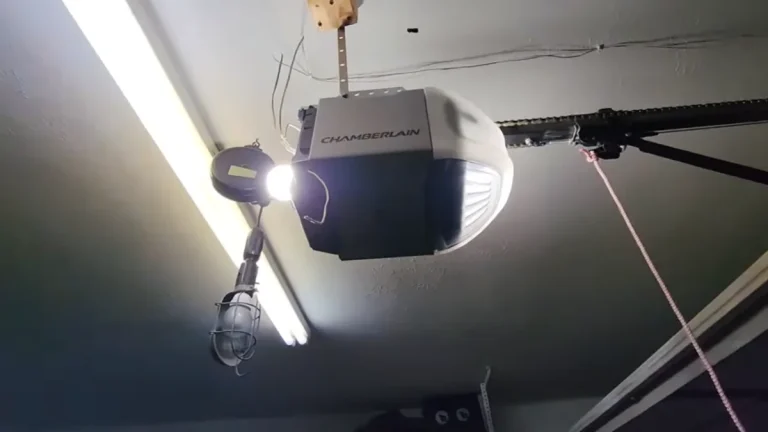
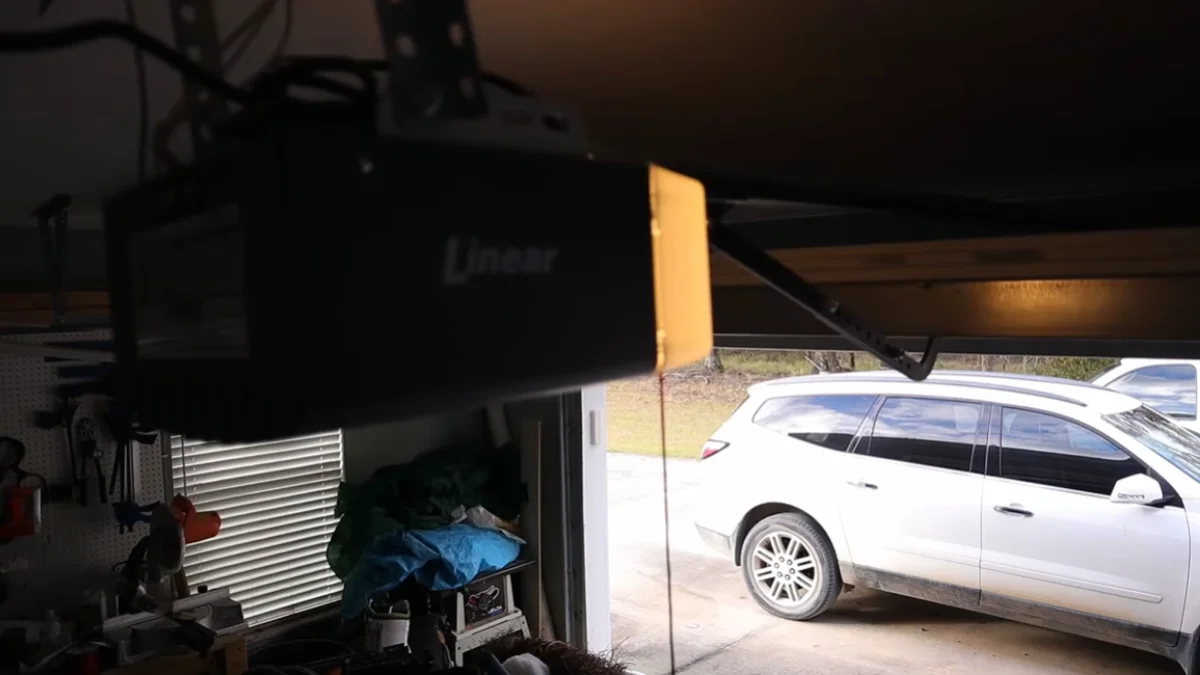
Garage door openers from manufacturers like LiftMaster, Chamberlain, and Genie are built with multiple safety mechanisms that interrupt operation the moment a fault is detected. When you press the remote or wall button and hear clicking but no movement, the opener has entered an error state — it registered the command but couldn’t execute it safely.
That clicking comes from one of a few sources: the relay inside the opener attempting to engage, the trolley (the carriage that slides along the drive rail) failing to catch, or the motor trying to start against a load it can’t move.
Why the Door Refuses to Move
The motor doesn’t know why it can’t complete the cycle — it only knows it can’t. Common mechanical failures that produce this symptom include broken torsion springs, a jammed trolley, or a misaligned track putting the door out of square. Common electrical malfunctions include a failed motor capacitor, blocked safety sensors, or a disrupted safety beam between the photo eyes mounted near the floor.
Each cause produces the same outward symptom — garage door clicking but not moving — but requires a completely different fix. That’s why systematic diagnostic work matters before ordering parts or calling for professional repair.
Cause 1: Safety Sensors and Photo Eyes
Blocked or misaligned photo eyes are the single most common reason a garage door won’t close with a clicking sound — and the easiest to fix yourself. ANSI A156.19 safety standards require all residential garage door openers to have photo eye sensors that halt closing if the beam is interrupted.
How to Check If Sensors Are Blocked or Misaligned
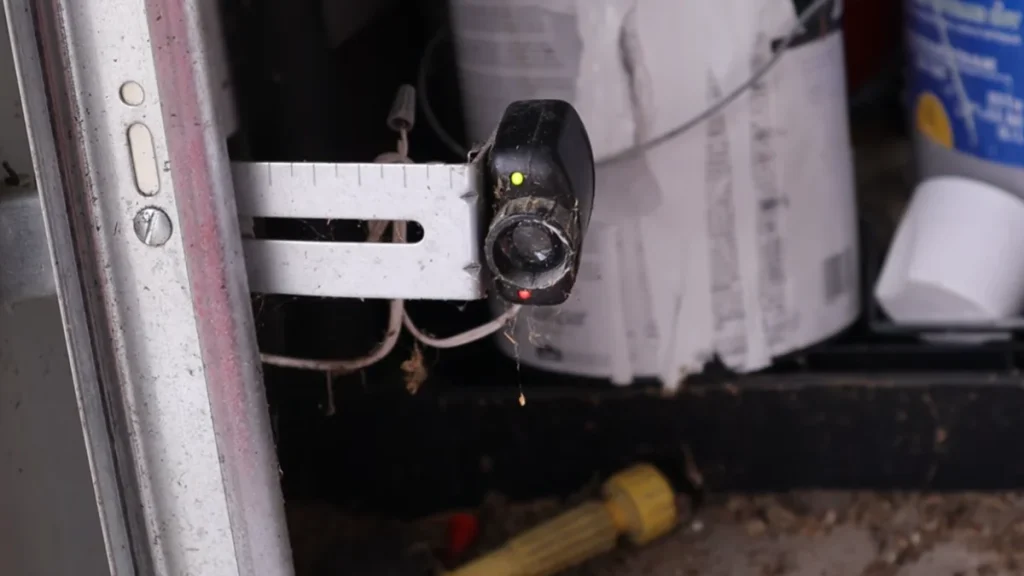
The photo eyes sit on opposing sides of the door track, roughly 4-6 inches above the ground. One sensor transmits an infrared beam; the other receives it. When the beam is broken — by dirt, a misplaced object, or physical misalignment — the opener enters an error state and refuses to close.
To test: clear the door path completely, then wave your hand slowly across the sensor beam. A click from the opener confirms it’s detecting the interruption. Next, check the indicator lights. On LiftMaster and Chamberlain models, the sending sensor glows amber and the receiving sensor should glow solid green. A blinking or absent green light means the beam isn’t connecting.
Cleaning and Realigning Garage Door Photo Eyes
Wipe both sensor lenses with a dry cloth — dust, spider webs, and moisture are frequent culprits. If the green light still blinks after cleaning, loosen the mounting bracket wing nut on the receiving sensor and adjust its angle slowly until the green LED goes solid. Both sensors must illuminate simultaneously for the safety beam to register as clear.
Signs Your Safety Beam Is Actually Faulty
If the green light never appears despite a clear path and a clean lens, the sensor itself may have failed. A door that closes manually using the wall button override but won’t respond to a close command from the opener confirms the photo eye circuit is the problem — not the motor or springs. Replacement sensors for most LiftMaster and Genie models cost $20-$40 and install in under 30 minutes.
Cause 2: Garage Door Spring Failures and Clicking Noise
Broken springs are the most mechanically serious cause of a garage door clicking but not moving — and the one that most clearly requires professional repair. Springs carry approximately 90% of the door’s weight, so when one fails, the opener motor is trying to lift a 150-250 lb door with almost no assistance.
How Broken Springs Cause Clicking Without Movement
The clicking you hear is the motor engaging its drive mechanism repeatedly, then disengaging when it detects the load is too heavy to move safely. Most openers have a built-in clutch or force limit setting — when the resistance exceeds that threshold, the opener stops and resets. The result is a rapid click-pause-click pattern rather than a single click.
A door with one failed spring may open partially then reverse, triggering the safety reversal mechanism built into all openers manufactured after 1993. Both springs must function together for balanced, controlled movement.
Identifying Broken or Worn Garage Door Springs
Start with a visual inspection. Torsion springs run horizontally above the door along a metal shaft — look for a visible gap or separation in the coil. Extension springs run along the side tracks and may show stretching or a broken section. Either failure is usually obvious.
Check your memory too. A spring failure typically announces itself with a loud bang or crack — often mistaken for something falling in the garage. If that sound preceded the clicking, the spring diagnosis is almost certain.
Here’s the clearest manual test: disengage the opener using the red emergency release cord and try lifting the door by hand. A properly balanced door lifts smoothly with light effort. A door that feels extremely heavy, or drops immediately when released, has a spring problem.
Do not attempt to replace torsion springs yourself. Springs are under extreme tension — sufficient to cause serious injury or death if mishandled. This repair requires a licensed garage door technician with the correct winding bars and safety training.
Cause 3: Motor Capacitor Failure
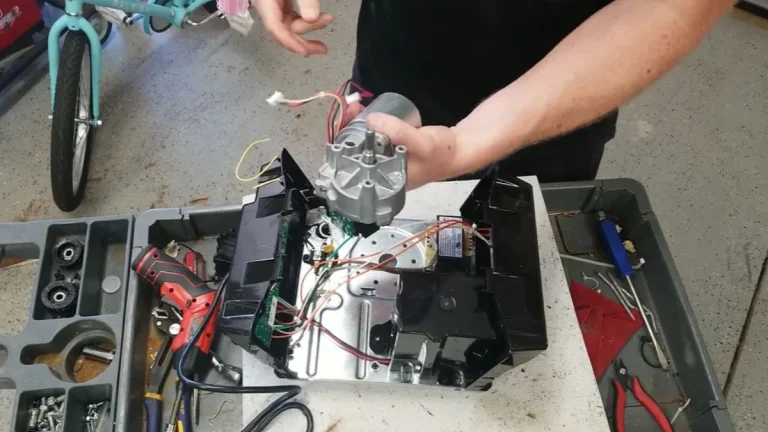
A failed motor capacitor produces a clicking sound with zero motor rotation — the opener attempts to start, can’t build the electrical charge needed to turn the motor, and resets. The capacitor is a small cylindrical component inside the opener unit that stores and releases a burst of electrical energy to give the motor its starting torque.
Without that burst, the motor hums or clicks but never spins. This failure is particularly common in openers 10 or more years old, or in units that run frequent open-close cycles in hot garage environments where heat degrades capacitor materials over time.
How to Identify Capacitor Failure
The diagnostic signature is specific: you hear a click or brief hum from the opener unit itself, but the drive mechanism never engages and the door doesn’t move at all. No grinding, no partial movement — just a click and silence. If the motor runs normally when the door is disconnected from the trolley but fails under load, a weakening capacitor is likely.
Testing and Safe Replacement
Here’s the critical safety point: a capacitor retains an electrical charge even after the opener is unplugged. Touching the terminals without discharging it first can deliver a serious shock.
Testing requires a multimeter with capacitance measurement capability. The reading should match the microfarad (µF) rating printed on the capacitor casing — a reading significantly below spec confirms failure. LiftMaster, Chamberlain, and Genie each use brand-specific capacitor models, so replacement parts must match the exact unit specifications.
Capacitor replacement costs $20-$60 in parts, but given the electrical hazard involved, professional diagnosis is the safer path for most homeowners unless you have direct experience working with capacitors.
Step-by-Step Diagnostic Flowchart
Before calling a technician or ordering parts, run through these 3 checks in order. Each question eliminates a category of failure and points you toward the correct cause. This takes less than 5 minutes and requires no tools.
Step 1: Does the Motor Attempt to Run, or Only Click?
Press the close button and listen closely to the opener unit on the ceiling.
- Motor runs but door doesn’t move: The electrical system is working. The problem is mechanical — a broken spring, jammed trolley, or misaligned track preventing movement.
- Only a click with no motor sound: The motor isn’t starting. This points to an electrical malfunction — most likely a failed motor capacitor or faulty solenoid.
Step 2: Are the Safety Sensor Lights Flashing or Dark?
Walk to the photo eyes mounted near the floor on each side of the door track.
- Flashing or dark indicator light: The safety beam is broken or the sensors are misaligned. Test this first — it’s the cheapest and easiest fix.
- Steady green light on receiving sensor: Sensors are functioning normally. Move to Step 3.
Step 3: Does the Door Move Freely When Manually Released?
Pull the red emergency release cord to disconnect the door from the opener trolley, then lift the door by hand.
- Door lifts smoothly with light effort: The track and trolley are clear. A broken spring is the most likely cause — the opener can’t carry the load alone.
- Door feels heavy, binds, or resists movement: The problem is physical obstruction. Check the track for debris or visible damage, and inspect the trolley carriage for a jammed or disconnected drive mechanism.
If you’re also hearing the chain slap without the door moving, it may not be attached to the chain at all.
When to Call a Professional
Some garage door repairs are straightforward DIY tasks. Others involve stored mechanical energy or live electrical components where a mistake causes serious injury. Knowing which is which saves you money without putting you at risk.
Repairs That Require a Licensed Technician
Torsion spring replacement is the clearest case. Springs are wound under hundreds of pounds of tension — a slip during winding can send a metal bar across the garage at lethal force. This repair requires specialty winding bars, calibrated tension settings, and hands-on training. Cost runs $150-$350 for a standard double-spring replacement, including parts and labor.
Motor capacitor and solenoid work sits in a gray area. The parts are inexpensive, but an improperly discharged capacitor delivers a shock capable of causing cardiac arrest. If you don’t have direct experience with electrical component isolation, professional diagnosis is the right call. Expect $75-$150 for a capacitor replacement by a technician.
Track realignment requires precision measurement to restore the door to square. A misaligned track puts uneven stress on rollers, cables, and the opener itself — an amateur fix often creates a secondary failure within weeks. Professional track adjustment runs $100-$200 depending on severity.
Repairs Confident DIYers Can Handle
Sensor replacement is genuinely DIY-safe for most homeowners. Replacement photo eyes for LiftMaster, Chamberlain, and Genie models cost $20-$40, connect with standard wire terminals, and require no special tools.
Most professional garage door companies offer same-day service for spring and capacitor failures — both are among the most common calls they receive. Ask any contractor about parts and labor warranty before work begins; reputable companies typically offer 90 days to 1 year on both.
Quick Wins Before Calling for Service
Run through these checks before scheduling a service call. Several of the most common causes behind a garage door clicking but not moving cost nothing to fix and take under 10 minutes to confirm or eliminate.
Check the Tracks and Door Path
Walk the full length of both vertical tracks and look for debris, leaves, or ice buildup that could jam the door mid-travel. Even a small obstruction can trigger the opener’s safety reversal mechanism and push it into an error state. Clear anything visible, then test the close cycle again.
Clean the Photo Eye Lenses
Wipe both sensor lenses with a dry, lint-free cloth. A thin film of dust or a single spider web across the lens is enough to break the safety beam and prevent closing. This takes 30 seconds and eliminates one of the most frequent causes of a garage door won’t close safety beam fault.
Test the Door Weight Manually
Pull the red emergency release cord to disconnect the trolley carriage from the drive mechanism. Lift the door by hand from the bottom. It should rise with minimal effort and stay in place when released halfway. Heavy resistance or immediate drop points directly to a spring problem — no further guessing needed.
Check Power Supply to the Opener
Confirm the opener’s power cord is fully seated in the outlet, then plug a lamp or phone charger into the same outlet to verify the circuit is live. A tripped breaker or a partially pulled plug produces a clicking opener with zero motor response — and it’s the easiest fix on this entire list.
Listen to the Click Itself
The sound profile narrows the cause significantly. A click from inside the opener unit with no motor noise suggests capacitor or solenoid failure. A click followed by brief motor engagement that stops immediately suggests a mechanical obstruction or broken spring loading the system beyond its force limit.
Get Professional Help If Unsure
The diagnostic flowchart in this article identifies the cause in most cases — but identifying a broken spring or failed capacitor is not the same as safely fixing one. Run the 3-step diagnostic first, handle sensor cleaning and power checks yourself, then call a licensed garage door technician for any repair involving springs, electrical components, or track realignment — these systems operate under forces and voltages where a single mistake causes serious injury, and no service call costs more than an emergency room visit.