Can You Vent a Dryer Into Your Garage? (Code Rules)

Venting a dryer into a garage is prohibited by the International Residential Code (IRC Section M1502.3), and doing it anyway creates fire, carbon monoxide, and mold hazards that can fail a home inspection or void your homeowner’s insurance.
The problem is that garages seem like an easy exit point — especially when the laundry room sits in a basement or an interior room with no obvious path to an exterior wall.
This guide covers exactly why garage venting fails code, what the IRC actually requires, and which legal alternatives work in tight spaces.
Why Garage Venting Is Prohibited
Garages look like a convenient escape route for dryer exhaust, but three separate hazards make them a code-prohibited dead end — moisture damage, combustion gas exposure, and structural deterioration.
Moisture and Condensation Damage
A standard residential dryer exhausts roughly 1 to 2 gallons of water vapor per load. In an enclosed garage, that humidity has nowhere to go. It saturates the air, condenses on cold surfaces — walls, vehicle paint, metal tools, stored cardboard — and creates conditions where mold colonies can establish within 24 to 48 hours. Repeated exposure warps drywall, rusts metal shelving, and degrades stored belongings over a single winter season.
Carbon Monoxide Risk From Gas Dryers
Gas dryers produce combustion byproducts, including carbon monoxide — a colorless, odorless gas that causes loss of consciousness at 150 ppm and death at sustained exposures above 400 ppm, according to CPSC guidance. Garages already concentrate vehicle exhaust fumes. Adding dryer combustion gases to that environment creates a dangerous overlap, particularly if the garage is attached to the living space and shares an air pathway.
Building Code Violations
IRC Section M1502.3 is explicit: dryer exhaust must discharge to the outdoors. It cannot terminate in a crawl space, attic, or garage. Local municipal codes in most jurisdictions mirror this language. A home inspection will flag garage venting as a code violation, which can delay or kill a real estate transaction and trigger mandatory remediation before closing.
Structural and Property Damage
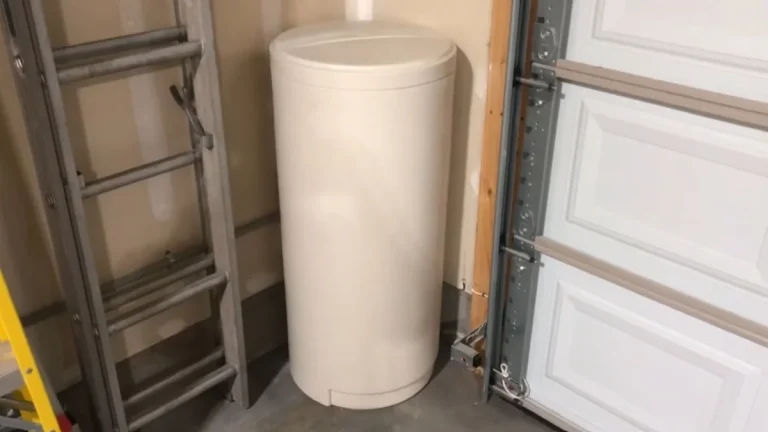
Lint-laden, moisture-heavy exhaust coats garage surfaces with a flammable residue. That lint buildup on a hot water heater, gas furnace, or vehicle engine compartment is a direct fire ignition risk — not a theoretical one.
Health, Safety, and Code Compliance Hazards
The risks from garage dryer venting compound each other — moisture feeds mold, lint feeds fire, and combustion gases feed a carbon monoxide problem that a closed garage door makes significantly worse.
Gas Dryer Combustion Risks
Gas dryers require a continuous supply of fresh combustion air. In a sealed or poorly ventilated garage, that air supply becomes depleted, causing incomplete combustion and elevated carbon monoxide output. Worse, negative pressure inside the garage can cause backdrafting — where exhaust gases reverse direction and pull back into the living space through gaps around the door or shared HVAC returns. A single backdraft event can expose an entire household to dangerous CO levels within minutes.
Moisture and Mold Problems
Garage air reaches its saturation point — the humidity level at which condensation forms — far faster than outdoor air because the space is enclosed and often unheated. Moisture from dryer exhaust condenses on metal framing, vehicle undercarriages, concrete floors, and any porous building material it contacts. According to the EPA, mold can begin colonizing damp surfaces in as little as 24 to 48 hours, making repeated venting cycles a reliable mold incubator over a single season.
Fire Hazard From Lint Accumulation
Lint is highly flammable — its ignition temperature is approximately 250°F, which is well within the heat range of normal dryer exhaust. When a duct terminates improperly inside a garage, lint bypasses the exterior flap and settles on nearby ignition sources: gas water heaters, furnaces, and vehicle engines. Restricted airflow from lint buildup also causes heat to back up into the dryer drum itself, which is the leading cause of dryer fires according to the U.S. Fire Administration.
Viable Dryer Venting Solutions
Two legitimate paths exist: run a properly installed duct to an exterior termination point, or switch to a ventless dryer technology that eliminates the exhaust problem entirely.
Exterior Wall and Roof Venting
The IRC sets a maximum duct run of 35 feet for a standard 4-inch rigid metal duct, with that length reduced by 5 feet for every 90-degree elbow and 2.5 feet for every 45-degree elbow. Keeping the run as short as possible — ideally under 25 feet — improves airflow, reduces lint accumulation, and lowers fire risk.
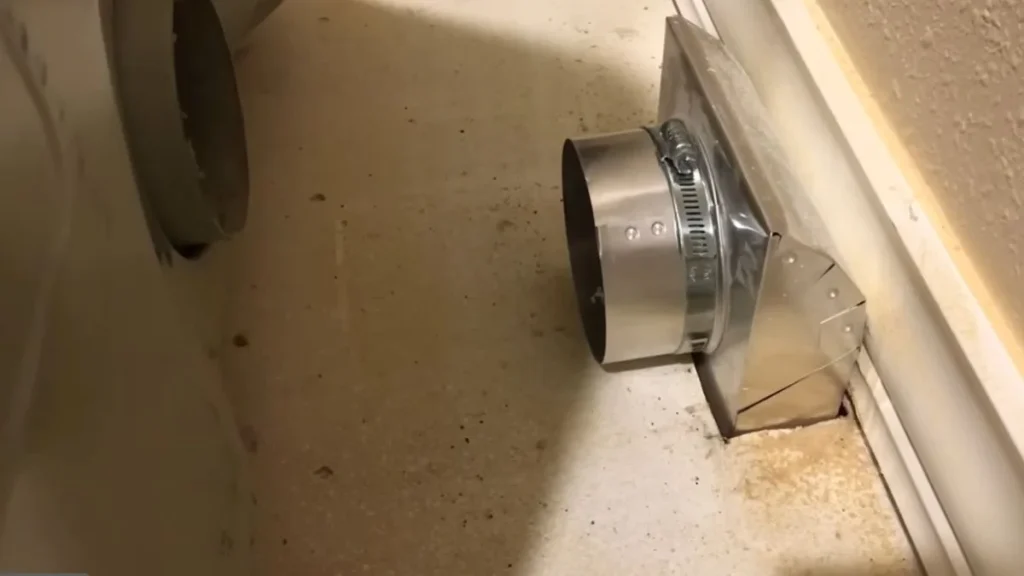
For dryer vent through wall installation, use rigid galvanized steel or aluminum duct, never flexible vinyl. Slope the duct slightly downward toward the exterior so condensation drains out rather than pooling inside. The exterior termination hood must include a backdraft damper — a spring-loaded or gravity flap that closes when the dryer is off — and must be positioned at least 3 feet from any window, door, or gas meter opening per IRC requirements.
Roof venting follows the same duct length rules but requires a weatherproof cap rated for dryer exhaust, not a standard roofing vent.
Alternative Dryer Technologies
Ventless condenser dryers and heat pump dryers handle moisture internally, making exterior venting unnecessary. A heat pump dryer, such as models from LG, Miele, or Bosch, uses a refrigerant loop to extract moisture from the drum and collect it in a reservoir or drain it directly. These units cost $900 to $1,800 on average but eliminate all ductwork, lint management, and building code compliance concerns related to exhaust routing.
The trade-off is longer cycle times — typically 15 to 30 minutes more per load than a vented dryer — and higher upfront cost versus a professional exterior venting installation, which typically runs $150 to $500 depending on run length and wall material.
Safe Transition From Garage Setup
Switching from an illegal garage vent to a code-compliant exterior setup is a one-time disruption that eliminates ongoing safety and moisture damage costs — and it is more achievable as a DIY project than most homeowners expect.
Routing Options: Wall, Floor, and Soffit
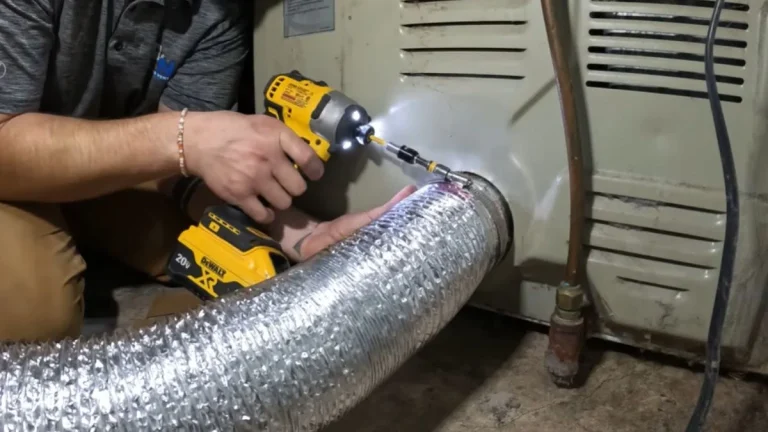
The most direct route is through an exterior wall behind or beside the dryer. Core-drilling a 4.25-inch hole through wood-framed or masonry walls is straightforward with a hole saw or masonry bit. Where an exterior wall is not accessible, routing through a floor into a crawl space and then out through the rim joist is a common and code-compliant alternative — provided the duct stays rigid and slopes toward the exit point.
Soffit venting is a third option but requires careful planning. The termination point must not sit beneath an attic vent or soffit screen, which would allow exhaust to re-enter the attic space. Use a dedicated dryer exhaust cap, not a standard soffit vent cover.
Temporary vs. Permanent Solutions
Indoor lint trap kits — plastic boxes filled with water that capture lint while releasing moisture into the room — are sold at hardware stores as a short-term fix. They are not code-compliant and do nothing to address humidity problems or gas dryer combustion byproducts. Treat them as a 1 to 2 day stopgap only, never a permanent solution.
DIY vs. Licensed HVAC Contractor
A straight exterior wall penetration with a duct run under 15 feet is a realistic DIY project for anyone comfortable with basic carpentry and sheet metal work. Runs exceeding 25 feet, multi-story routing, or any installation involving gas line proximity should involve a licensed HVAC contractor. Permit requirements vary by municipality — contact your local building department before starting, since some jurisdictions require an inspection even for simple dryer vent through wall installation.
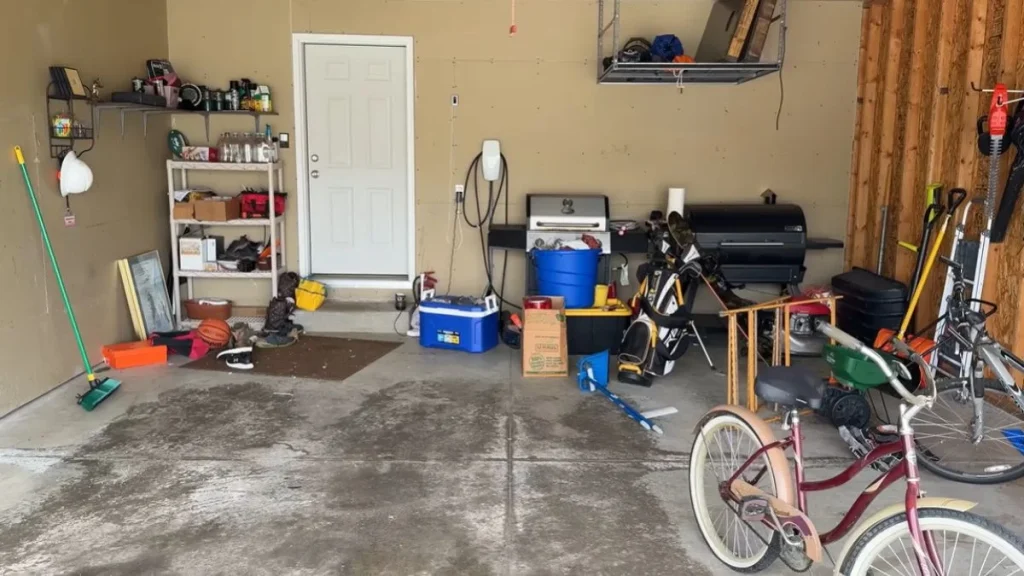
In most cases, venting into the garage isn’t recommended — here’s how to properly reroute it outside instead.
FAQ
Is it legal to vent a dryer into a garage?
No. IRC Section M1502.3 explicitly requires dryer exhaust to terminate outdoors, and most local municipal codes mirror this requirement. Venting into a garage is a code violation that will be flagged during any professional home inspection and can complicate a home sale or insurance claim.
What happens if you vent a dryer into a garage?
Venting into a garage causes moisture accumulation that leads to mold growth, condensation damage on vehicles and stored items, and lint buildup on nearby ignition sources like gas water heaters. Gas dryers add carbon monoxide exposure to that list, which becomes life-threatening in an enclosed or attached garage with limited ventilation.
What are my best alternatives if my laundry room is in the garage?
The 2 best options are routing a rigid metal duct through the nearest exterior wall to a code-compliant termination hood, or switching to a ventless heat pump dryer from a manufacturer like LG, Bosch, or Miele. The exterior wall route costs $150 to $500 installed, while heat pump dryers run $900 to $1,800 but require zero ductwork.
Make the Right Call on Dryer Venting
Garage venting is never a gray area — it violates the IRC, damages property, and creates genuine life-safety hazards that no convenience factor justifies. Measure the shortest path from your dryer to an exterior wall today, then contact your local building department to confirm permit requirements before cutting a single hole. If that route exceeds 35 feet, price out a heat pump dryer instead.