Why Your Garage GFCI Keeps Tripping After Rain (And How to Fix It)
A garage GFCI outlet keeps tripping after rain for one specific reason: moisture is reaching the electrical circuit, and the outlet is doing exactly what it was designed to do.
The frustrating part is the cycle — you reset it, rain hits again, it trips again, and now you’re not sure whether it’s safe to keep forcing it back on.
This article gives you the root cause, a safe reset process, and concrete fixes that stop the tripping for good.
Root Causes: Why Moisture Triggers GFCI Outlets
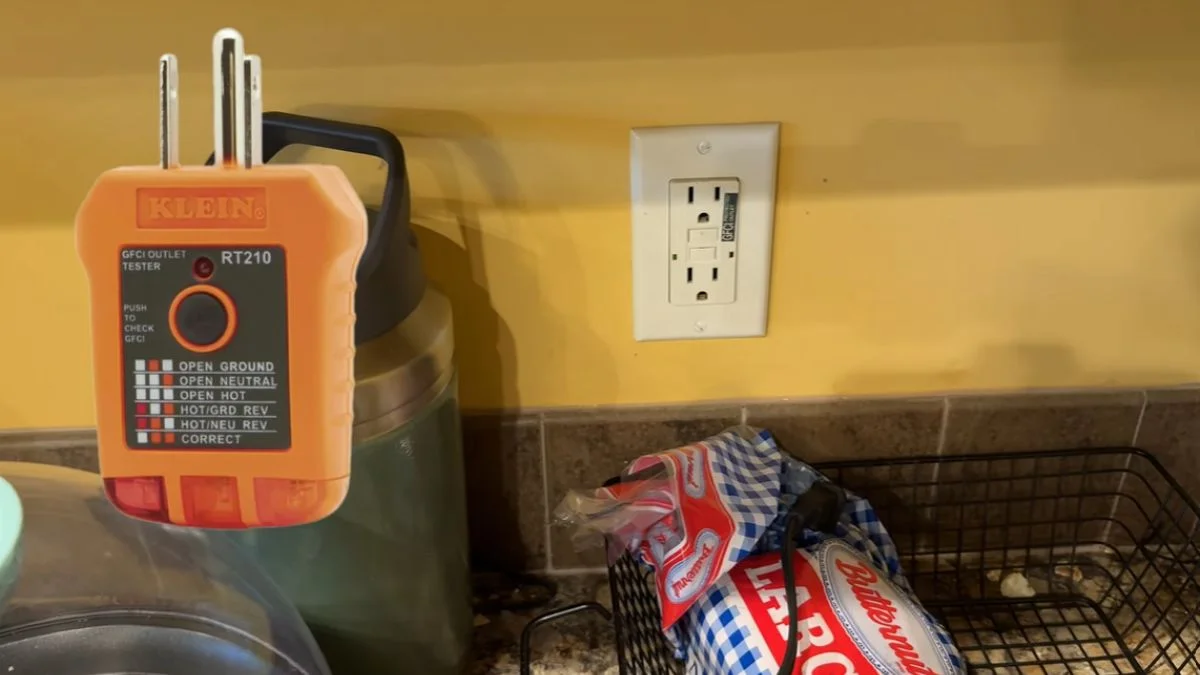
A ground fault circuit interrupter (GFCI) — the outlet with the TEST and RESET buttons — monitors current flow between the hot and neutral wires. When even 4 to 6 milliamps goes missing, it assumes that current is flowing through an unintended path, like a person or water, and shuts off in 1/40th of a second.
Moisture doesn’t need to flood the box to cause this. A thin film of water is enough to create a new current path and trigger protection.
Water Intrusion and Direct Moisture Contact
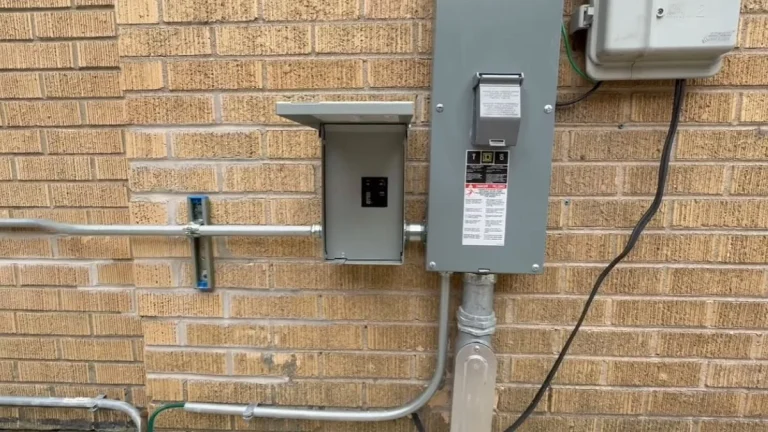
Rainwater reaches outlet boxes more easily than most homeowners expect. Gap sealing around the exterior wall penetration is often the entry point — water travels along conduit or wiring into the box itself. Condensation is a separate and equally common culprit. When a cold garage warms rapidly after rain, moisture in the air deposits directly on the outlet’s internal components, creating a low-resistance surface that mimics a ground fault.
Splashing from a wet garage floor, a running hose, or even wet hands contacting the outlet terminals can all trigger the same response. Weather-resistant GFCI outlets with in-use covers reduce this risk significantly — standard covers leave the outlet exposed during active use.
Ground Faults from Humidity and Leakage Current
High garage humidity creates invisible leakage current — tiny amounts of electricity, measured in microamps, that bleed from the hot wire to the ground through damp air, damp insulation, or wet surfaces. A GFCI is sensitive enough to detect this.
Wet tools or extension cords plugged into the outlet compound the problem. Damp soil near the garage foundation also increases the likelihood of ground faults by lowering the resistance of nearby grounded surfaces. The GFCI isn’t malfunctioning in these situations — it’s detecting a real electrical hazard and responding correctly.
Troubleshooting: Is It Moisture or a Fault?
Not every GFCI trip after rain means permanent damage. The first job is to determine whether moisture caused a temporary fault or whether something in the circuit has actually failed.
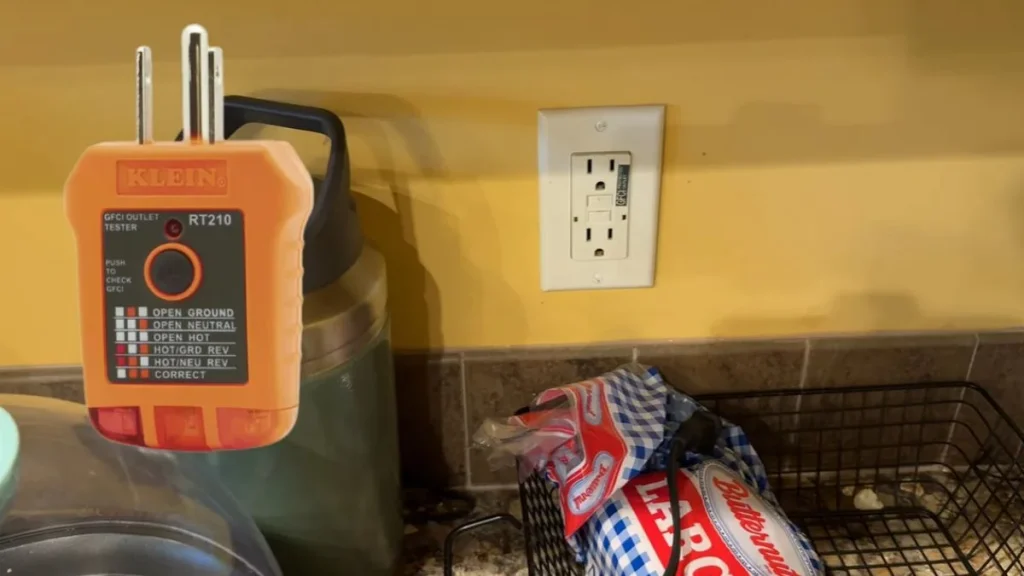
Step-by-Step Diagnostic Approach
Work through these steps in order before touching the RESET button:
- Visually inspect the outlet. Look for visible water droplets, condensation film, or discoloration inside the cover plate. A flashlight helps.
- Unplug everything on the circuit. Wet tools, extension cords, or appliances can hold enough moisture to keep triggering the GFCI even after the outlet itself dries.
- Dry the outlet completely. Use a dry cloth on the cover plate, then aim a fan or hair dryer on low heat at the outlet for 10 to 15 minutes. Never use compressed air — it can push moisture deeper into the box.
- Reset with dry hands. Press RESET firmly until it clicks. If it holds, plugged-in equipment was the likely source.
- Check downstream outlets. One GFCI often protects multiple standard outlets on the same circuit. If those outlets are also dead, the fault may be further along the circuit, not at the GFCI itself.
When to Call an Electrician vs. DIY Fix
A GFCI that won’t reset after thorough drying is a failed device — replace it. That’s a straightforward DIY repair for most homeowners.
Here’s the problem. If the outlet resets but trips again within hours on a dry day, the fault isn’t moisture — it’s a wiring issue, damaged insulation, or a ground fault deeper in the circuit. The same applies if you notice a burning smell, scorch marks, or melted plastic anywhere near the outlet.
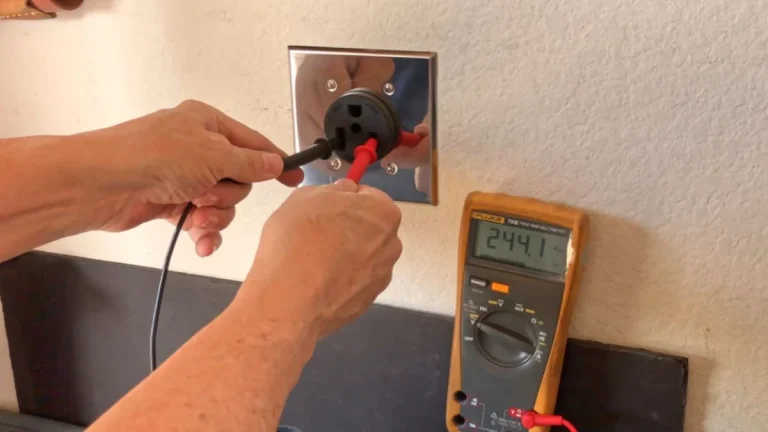
Ground faults originating from damp soil near the garage foundation also fall outside DIY scope. These require a licensed electrician with a megohmmeter (a tool that measures insulation resistance) to locate and resolve safely.
Permanent Solutions: Moisture Prevention and Upgrade
Resetting the outlet after every rainstorm is not a fix — it’s a workaround. These solutions address the actual sources of moisture intrusion and reduce the conditions that trigger ground fault detection in the first place.
Weatherproofing the Outlet Itself
Start at the outlet box. Standard cover plates leave the outlet fully exposed during use — an in-use cover (also called a bubble cover or while-in-use cover) keeps rain and splash off the outlet even when a cord is plugged in. Pair that with a weatherproof outlet box that includes a rubber gasket behind the cover plate and a small drain hole at the bottom to prevent pooling.
For garages with persistent moisture problems, replace the standard GFCI with an IP-rated weather-resistant model. Leviton and Hubbell both manufacture weather-resistant GFCI outlets rated for damp and wet locations. Seal any gaps around the outlet box where it meets the wall with silicone caulk — these gaps are a direct water intrusion path along conduit.
Garage-Wide Moisture Control
Outlet waterproofing only solves half the problem if the garage itself stays humid. A dehumidifier sized for your garage volume — typically 30 to 50 pints per day for a two-car garage — pulls enough moisture from the air to prevent condensation on electrical components. Santa Fe and Frigidaire both make units well-suited for unfinished garage spaces.
Improve air circulation by cracking a window or running an exhaust fan during and after heavy rain. Check that the ground outside slopes away from the foundation at a grade of at least 1 inch per foot for the first 6 feet — flat or inward-sloping ground pushes water toward the slab and increases ground fault risk at floor-level outlets.
GFCI Breaker vs. GFCI Outlet Trade-offs
| Feature | GFCI Outlet | GFCI Breaker |
|---|---|---|
| Protection scope | Single outlet or downstream outlets | Entire circuit |
| Reset location | At the outlet | At the breaker panel |
| Best for wet garages | Targeted wet zones | Whole-garage moisture problems |
| Typical cost | $15–$40 | $40–$100 |
| NEC compliance | Yes, for individual locations | Yes, for full circuit protection |
The National Electrical Code (NEC) requires GFCI protection for all 125-volt, 15- and 20-amp receptacles in garages. A GFCI breaker satisfies that requirement for every outlet on the circuit and eliminates the individual outlet as a failure point — an advantage in garages where humidity causing GFCI trips is a recurring seasonal issue.
This is often a moisture problem at its root — a proper vapor barrier can prevent it long-term.
Frequently Asked Questions
Why won’t my GFCI outlet reset after rain?
The outlet won’t reset because moisture inside the box is still creating a leakage current path, or the device itself has failed. Dry the outlet thoroughly with a fan for 10 to 15 minutes, unplug all connected equipment, then retry. If it still won’t reset on a completely dry day, the GFCI needs replacement.
Will a GFCI outlet trip if it gets wet?
Yes — that is the intended function. A GFCI detects as little as 4 to 6 milliamps of leakage current, and even a thin film of water on internal components is enough to create that imbalance and trigger an immediate shutoff.
How do I know if my GFCI outlet is damaged from water?
Look for 4 specific signs: the outlet won’t reset after fully drying, the cover plate or face shows discoloration or scorch marks, there is a burning smell near the outlet, or the RESET button feels loose and doesn’t click firmly. Any one of these means the device needs replacement before the circuit is used again.
Can humidity alone trip a GFCI outlet?
Yes. High garage humidity generates leakage current through damp insulation, wet surfaces, and moisture-laden air — all without visible standing water. A dehumidifier and improved ventilation reduce this significantly.
Stop the Cycle: Your Next Step
A tripping GFCI is not the problem — moisture reaching your garage circuit is, and the outlet will keep tripping until that source is eliminated. Start today by inspecting your outlet box for gaps, installing an in-use bubble cover, and picking up a weather-resistant GFCI replacement if the device won’t reset cleanly after drying. If the tripping continues on dry days after those fixes, call a licensed electrician — the fault is deeper than the outlet.