Garage Door Cable Off Pulley: DIY Fix or Pro Call?
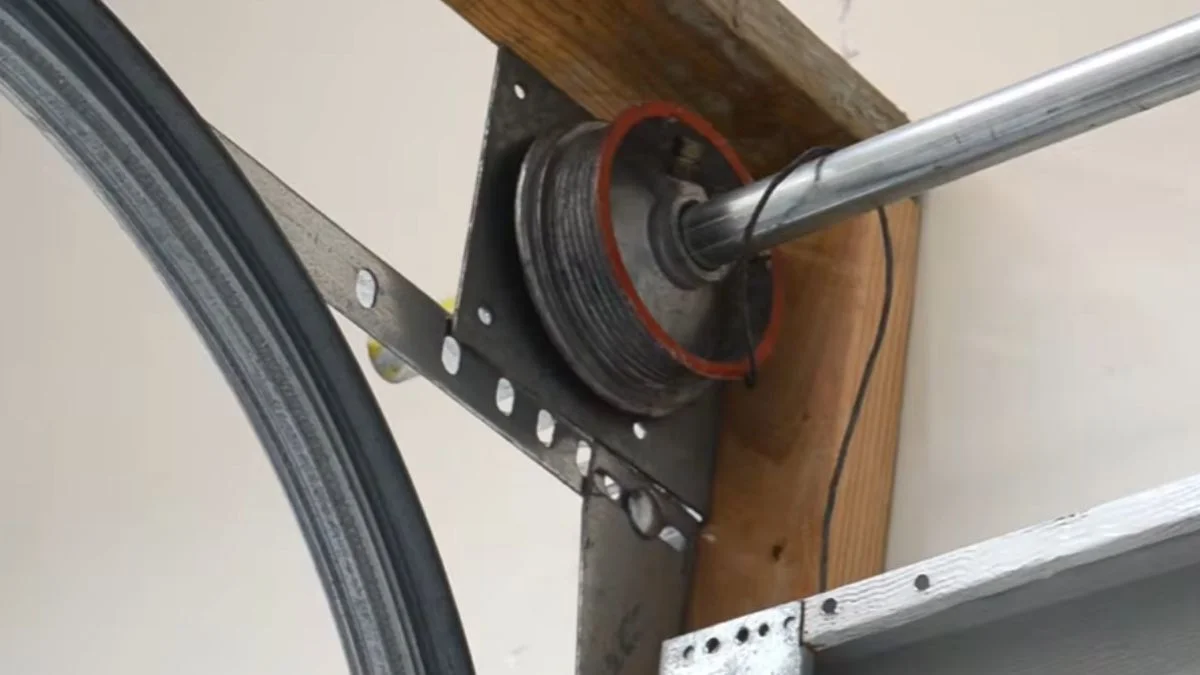
A garage door cable came off pulley is one of the most common calls garage technicians receive — and one of the most mishandled DIY attempts.
The problem is immediate: your door won’t move safely, you can’t tell if it’s a quick fix or a dangerous spring tension issue, and you need a clear answer fast.
This guide tells you exactly what caused the failure, which situations are safe to fix yourself, and when calling a pro is the only smart move.
Why Do Garage Door Cables Fall Off Pulleys?
Cables don’t jump off pulleys randomly — there’s always a mechanical cause. Identifying it before attempting any repair prevents the same failure from happening again within weeks.
Worn or Damaged Pulleys
Pulleys develop groove erosion over years of cable friction. When the groove wears shallow or uneven, the cable loses its seating path and slips free under load. Rust and corrosion accelerate this — a pulley with visible pitting or a wobbly spin is due for replacement, not reuse. Check pulley set screws while you’re at it; a loose mounting bracket causes lateral shift that pulls the cable off-center.
Cable Slack and Tension Imbalance
Garage door cable slack is the most overlooked cause. Cables that were never tensioned correctly at installation — or that have stretched over time — develop enough looseness to jump the groove during door movement. On dual-cable systems, uneven tension between the two sides creates a torquing effect that forces one cable off its pulley first.
Track Misalignment and Binding
When the door binds against a misaligned track, the cable tension system absorbs the stress unevenly. That sudden force spike pushes the cable out of the pulley groove. Track alignment verification should happen any time a cable derails — the track is often the root cause.
Broken or Weakened Torsion Springs
A failed torsion spring assembly removes the counterbalance force the door depends on. Without it, cables go slack instantly and hang at wrong angles, making pulley derailment nearly inevitable under full door weight.
Safety Warnings Before Attempting DIY
Stop before you touch anything. Garage door cable repairs involve one of the most dangerous stored-energy systems in a residential home — and most DIY injuries happen in the first 60 seconds of handling hardware incorrectly.
High-Tension Spring Hazards
A standard torsion spring assembly stores between 100 and 200 foot-pounds of torque when wound. If that energy releases suddenly — through a slip, wrong tool contact, or accidental unwinding — it can cause broken bones, deep lacerations, or worse. Never attempt cable tension adjustment if the torsion spring is visibly broken, fully slack, or shows separation at the coils. That condition requires professional garage door service, no exceptions.
When to Call a Professional Immediately
Some situations disqualify DIY entirely:
- Both cables have derailed simultaneously, signaling system-wide cable tension failure
- The track shows visible bending, cracking, or severe misalignment that cable work alone won’t fix
- The door frame itself has shifted or the header bracket has pulled from the wall
- You feel uncertain at any point during inspection — uncertainty here has real physical consequences
The safety risks of DIY repair multiply fast when more than one component is compromised.
Minimum Tools and Safety Equipment Required
Do not start without these on hand:
- Socket set and adjustable wrench for pulley set screws and bracket bolts
- Vice grips and C-clamps to lock the door in place and prevent movement
- Safety glasses and heavy work gloves — non-negotiable
- Wooden blocks or a floor jack to support the door at a fixed height during work
Improvising tool substitutes on a cable tension system is how minor repairs become emergency room visits.
Step-by-Step DIY Cable Reattachment
This process applies only when the torsion spring is intact, a single cable has derailed, and the track shows no damage. If all three conditions aren’t met, stop and call a professional garage door service.
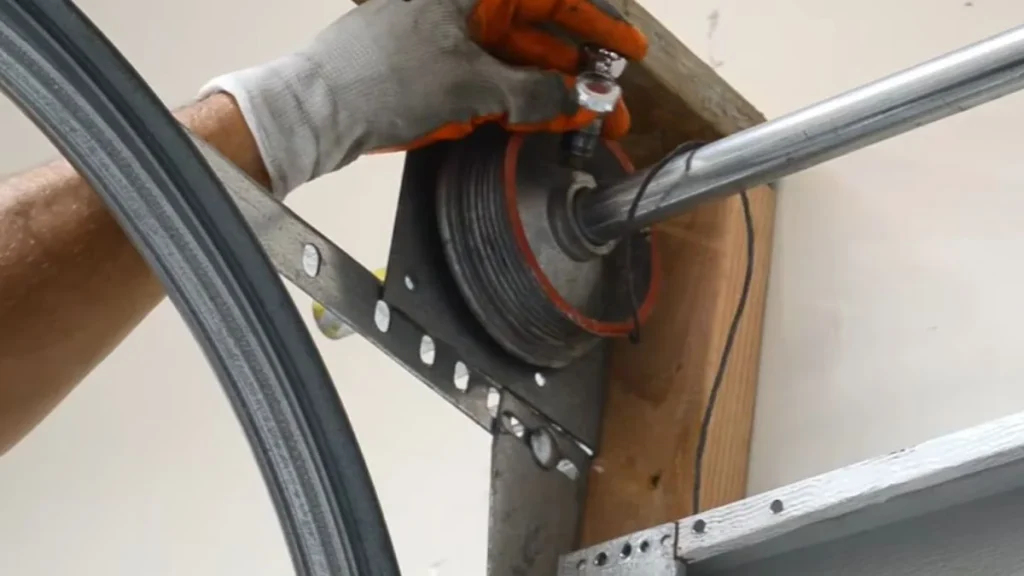
Pre-Repair Setup
Open the door fully and prop it with wooden blocks placed under each bottom corner. A fully open door releases most torsion spring tension, making the cable tension system significantly safer to handle. Locate the pulley set screws on each side bracket and identify the cable anchor points at the bottom corners of the door. Lay out every tool before loosening a single bolt — stopping mid-repair to find a wrench risks door movement.
Loosening and Repositioning the Cable
Loosen the pulley set screws just enough to allow the cable spool to rotate freely — do not remove them completely. Feed the cable back into the pulley groove by hand, starting at the bottom anchor point and working upward. Wrap the cable evenly onto the spool, maintaining light hand tension throughout. Poor cable spool replacement technique — uneven wrapping or crossing of cable layers — causes the same pulley derailment to repeat within days. Re-tighten set screws gradually, alternating sides to seat the bracket evenly.
Verifying Even Tension on Both Sides
Cable slack management on dual-cable systems requires checking both sides, not just the repaired one. Pinch each cable at the midpoint and measure deflection — both sides should feel equally taut. Run the door slowly through one full cycle by hand before using the opener. Watch for hesitation, grinding, or lateral drift, which indicate remaining pulley misalignment or uneven cable tension adjustment that needs correction before normal use resumes.
Diagnosing Why the Cable Keeps Slipping Off
A cable that derails more than once has an underlying cause that the reattachment process didn’t fix. Repeat failures mean something in the cable tension system is still wrong.
Measuring Cable Tension Specifications
Cable tension requirements vary by door weight and cable gauge. Use this as a baseline reference:
| Door Weight | Recommended Cable Gauge | Expected Tension Range |
|---|---|---|
| Under 100 lbs | 1/8 inch | 10–15 lbs deflection force |
| 100–150 lbs | 9/32 inch | 15–25 lbs deflection force |
| 150–200 lbs | 5/16 inch | 25–35 lbs deflection force |
Deflection force means the resistance you feel when pressing the cable midpoint inward by one inch. On dual-cable systems, compare the lengths visually from anchor point to pulley — uneven lengths confirm tension imbalance. Check pulley alignment by holding a straightedge across both bracket faces; any gap indicates pulley misalignment requiring bracket adjustment.
Identifying Underlying Causes Before Repeat Failure
Three components cause most repeat derailments:
Worn pulley groove: Run your finger inside the pulley groove. A smooth, shallow, or chipped groove can’t hold the cable under load. Pulley replacement costs $10–$30 per unit and eliminates this cause entirely.
Weakened torsion spring: A torsion spring assembly losing tension produces visible cable slack management problems — cables that sag noticeably when the door is closed signal spring fatigue, not a cable problem.
Track misalignment: Bind marks — shiny scuff lines on the door’s vertical edges — confirm the door is contacting the track during operation. Track alignment verification before any cable work prevents the same force spike from repeating.
When Professional Service Makes Sense
DIY cable reattachment saves money in straightforward cases, but the wrong call costs more than a service fee — it costs safety. Knowing the price difference and the hard cutoff points makes the decision clear.
Cost Comparison: DIY vs. Technician Repair
| Repair Type | DIY Cost | Professional Cost |
|---|---|---|
| Single cable reattachment | $0–$15 (tools only) | $75–$150 service call |
| Full cable replacement (one side) | $10–$25 (parts) | $100–$200 installed |
| Cable replacement with spring adjustment | Not recommended DIY | $150–$350 depending on spring type |
| Full cable and pulley system rebuild | $30–$60 (parts) | $200–$450 installed |
Regional pricing varies significantly — urban markets run 20–40% higher than rural areas. Most professional garage door service companies offer a 90-day labor warranty on cable work; some extend to one year on full system replacements. No DIY repair carries that guarantee.
Signs Indicating Professional Help Is Necessary
Stop DIY attempts and call a certified technician when any of these are present:
- The cable slips off again within 1–2 cycles after reattachment, indicating a systemic pulley misalignment or spring tension problem
- The door visibly leans or drags to one side despite cable tension adjustment on both sides
- The torsion spring assembly shows any damage — torsion spring work requires specialized tools and training that fall outside safe DIY scope
- Frame damage, cracked mounting plates, or a shifted header bracket are present
According to DASMA (Door and Access Systems Manufacturers Association), torsion spring adjustment and replacement should only be performed by trained professionals due to the stored energy levels involved.
Know Your Limits and Call for Backup
A garage door cable came off pulley is a manageable DIY repair exactly once — when the spring is intact, the track is straight, and only one cable has derailed. If your inspection reveals anything beyond that single scenario, the repair has crossed into professional territory where the cost of a service call is far less than the cost of a serious injury.
Call a DASMA-certified technician, describe what you found during inspection, and ask for an itemized quote before authorizing any work.