Water Leaking From Garage Ceiling? Here’s How to Find the Source

Water leaking from garage ceiling spaces causes damage fast — the EPA warns that mold can begin growing on wet building materials in as little as 24 to 48 hours.
The real frustration is not the water itself but not knowing where it is coming from — roof, plumbing, gutters, or concrete seepage all look identical from below, and guessing wrong means fixing the wrong thing.
Read this guide and you will know exactly which source is responsible, how urgent the situation is, and whether you can address it yourself or need a licensed contractor.
The 5 Most Common Leak Sources in a Garage Ceiling
Not every garage ceiling leak comes from the roof. Identifying the correct moisture intrusion source before spending money on repairs is the single most important step in any water damage assessment.
Roof Leaks and Weather Events
Damaged shingles, cracked flashing around chimneys or skylights, and compromised roof valleys all allow water to travel several feet horizontally before dripping through your garage ceiling. This is why garage ceiling water stains often appear nowhere near the actual roof penetration point. Ice dams — ridges of ice that form at the roof edge during freeze-thaw cycles — are a frequent culprit in northern climates, forcing meltwater backward under shingles.
Plumbing Leaks From Supply Lines or Bathrooms
If your home has a bathroom, laundry room, or water supply line directly above the garage, a slow pipe leak or failed wax ring seal can drip steadily for weeks before becoming visible. Unlike roof leaks, plumbing leaks occur regardless of weather — that distinction is a key leak detection method.
Concrete Slab and Foundation Seepage
Concrete is porous by nature. The American Concrete Institute confirms that without proper vapor barriers and sealants, moisture migrates through slabs and foundation walls, producing a consistent damp appearance rather than defined drip points.
Gutter and Downspout Failures
Clogged or disconnected gutters dump water directly against your fascia and soffit, which then wicks inward. This source is almost always weather-dependent and concentrated along the garage’s exterior walls.
HVAC Condensation and Drain Line Blockages
A clogged condensate drain line on a central air system can overflow the drip pan and leak through the ceiling below. This source appears during cooling season and produces water coming through the garage ceiling near the air handler location.
How to Identify Your Leak’s Source
Systematic observation eliminates the guesswork that leads to costly misdiagnosis. Work through these three methods in order before contacting any contractor.

Visual Inspection Techniques
Start by examining the garage ceiling water stains closely. A brown, ring-shaped stain that grew slowly over time points to a chronic slow leak. A large, irregular wet patch that appeared after a single storm points to acute roof damage. Location matters too — stains near the center of the ceiling are more likely plumbing-related, while stains along exterior walls or corners typically indicate roof or gutter failures. Press the drywall gently: soft, spongy texture means active or very recent moisture, while firm but discolored drywall suggests an older, possibly resolved leak.
Pressure Testing for Hidden Plumbing Leaks
To distinguish a roof leak vs. plumbing leak in your garage, check your water meter. Turn off every fixture and appliance in the house, then watch the meter’s leak indicator dial for 10 minutes without using any water. Any movement confirms an active supply line leak. For more precise isolation, close the shut-off valves to specific zones — bathrooms, laundry — one at a time and repeat the test.
Detection Tools and Moisture Assessment
A digital moisture meter, such as the General Tools MMD4E, gives you a numerical reading that removes subjectivity. Readings above 17% in drywall indicate problematic moisture levels requiring action. Thermal imaging cameras, available for rent at most Home Depot locations, reveal hidden water pathways as temperature differentials on the ceiling surface. For concrete seepage specifically, the calcium chloride test — taping a dish of calcium chloride crystals to the slab and checking for moisture absorption after 60 hours — confirms whether water is rising from below rather than falling from above.
When to Call a Professional vs. DIY Limits
Some leak situations are diagnostic puzzles you can solve yourself. Others are structural integrity inspections or active damage scenarios where delayed professional involvement increases both risk and garage ceiling leak repair cost significantly.
Signs You Need a Plumber Immediately
Call a licensed plumber the same day if you see any of these:
- Active dripping that continues 24+ hours after rain has stopped
- Multiple separate water stains appearing within days of each other
- Water pooling on the garage floor directly below the ceiling
- A sudden spike in your water bill without explanation
These signs indicate an active supply line or fixture leak, not weather-related intrusion. Every hour of delay adds remediation timeline and structural damage.
When to Call a Roofer
Schedule a roofing assessment — not a DIY inspection — when water coming through the garage ceiling correlates directly with heavy rain or snowmelt, or when staining runs along the roofline perimeter. Walking an unknown roof without training risks both personal injury and additional shingle damage.
Water Damage Specialist Indicators
A musty smell, sagging or bubbling drywall, or dampness spreading across more than 10 square feet are signs that mold remediation and structural drying are already necessary. At this stage, a water damage assessment by a certified IICRC restorer takes priority over identifying the source — stopping the biological clock matters first.
The Cost Calculation
A professional leak detection inspection typically runs $150 to $500. Misdiagnosing the source and completing the wrong repair first can easily cost $1,000 to $3,000 in wasted labor and materials. The math favors professional diagnosis for any leak you cannot confirm through the visual and meter methods in section 3.
Immediate Containment and Damage Prevention
Source identification matters, but stopping active damage comes first. These steps protect your home and your insurance claim while you work through the diagnostic process.
Water Collection and Removal
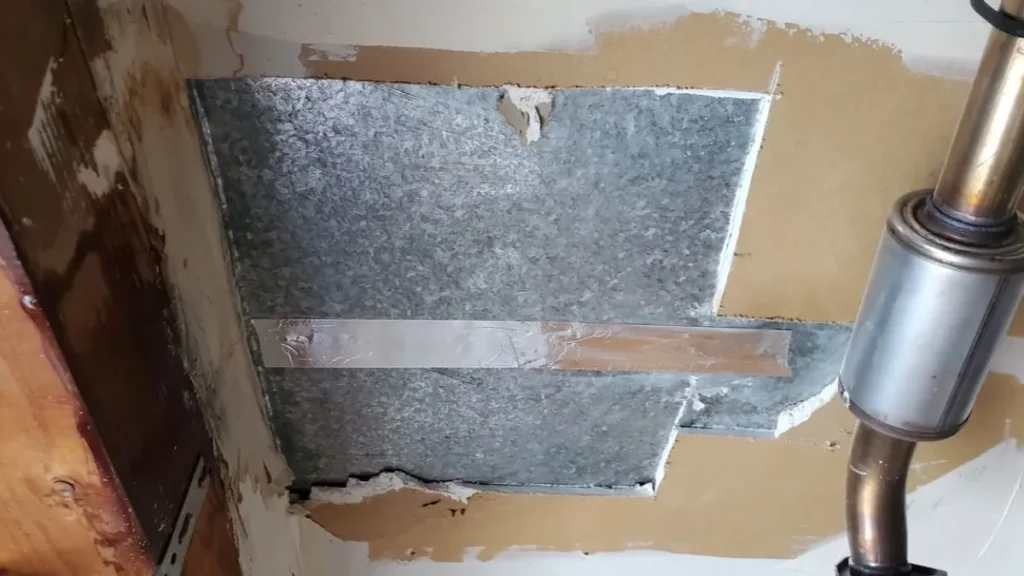
Place heavy-duty plastic sheeting or a polyethylene tarp directly under any active drip points, with buckets positioned at the lowest collection spots. Run a dehumidifier — the Frigidaire FFAD7033R1 handles up to 700 square feet effectively — continuously until the space reads below 50% relative humidity. A cheap hygrometer from any hardware store confirms when you have hit that threshold. Remove any cardboard boxes, wood items, or stored belongings from the wet zone immediately, as these accelerate mold growth and complicate your water damage assessment.
Mold Timeline and Prevention
The 24 to 48 hour mold window is not theoretical — it is the remediation timeline that drives every decision. Keep garage doors or windows cracked for cross-ventilation, run the dehumidifier, and avoid sealing wet materials inside enclosed spaces. If you smell a musty odor within the first 48 hours, mold is likely already present and a professional assessment is necessary.
Documenting Damage for Insurance
Photograph every stain, wet surface, and damaged item before moving or drying anything. Video walkthrough footage with spoken timestamps strengthens insurance claims considerably. Most homeowner policies require prompt reporting, so contact your insurer within 24 hours of discovering water coming through the garage ceiling.
Temporary vs. Permanent Fix Framework
A temporary fix — roof tarping, pipe clamp, or hydraulic cement on a crack — buys time for proper diagnosis and professional repair. Treat any temporary measure as a 72-hour bridge, not a solution. Permanent garage ceiling leak repair begins only after the source is confirmed.
Frequently Asked Questions
Will homeowners insurance cover a garage ceiling leak?
Coverage depends on the cause. Sudden, accidental damage — like a burst pipe or storm-related roof failure — is typically covered under standard HO-3 policies. Slow leaks caused by neglected maintenance or gradual seepage are almost always excluded, so prompt reporting and clear documentation of the triggering event are critical.
Can water seep up through concrete and affect the garage ceiling?
Yes, but only in specific configurations. Concrete slab seepage affects floors and lower walls directly, not ceilings — however, if your garage ceiling sits below a concrete slab or structural deck from a living space above, moisture migrating through that upper slab can absolutely produce ceiling staining and dripping.
How long can a ceiling leak go before structural failure occurs?
Drywall begins losing structural integrity within 24 to 72 hours of sustained saturation. Wood framing and OSB sheathing can show significant rot and weakening within 2 to 4 weeks of continuous moisture exposure. A leak running undetected for several months creates genuine collapse risk in severe cases, making early identification the single most important factor in limiting repair scope and cost.
Stop Leaks Before They Restart
The source of a garage ceiling leak determines everything — the repair method, the urgency, the cost, and whether your insurance claim succeeds or gets denied. Start today by running the water meter test and photographing every stain with a timestamp, then use those two data points to match your situation against the five sources in section 2.
If the meter moves or the stains are soft and spreading, call a licensed plumber or IICRC-certified water damage specialist before the 48-hour mold window closes.